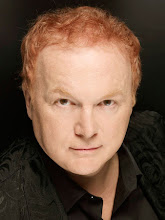
On Twitter just now, I resolved to post a blog about my experiences with Abba, - how I met them, etc. All this nostalgia was triggered by my noting on Twitter that I always remembered word Aber (pronounced “Abba” and meaning “but”) in German by imagining Agnetha’s butt. That was my word association. This triggered a string of Tweets in which it emerged that I had once produced Frida (for a Cameron Mackintosh musical called “Abbacadabra”, and that more recently, Agnetha had done one of my songs “Sometimes When I’m Dreaming”. Several Abba memories come to mind so I thought I’d set aside my workload for today and clear my brains out (yuk, what a nasty idea) by writing a blog about Abba and me. Then I remembered that there is a section in my unfinished autobiography, explaining how I met them, so I’ll start with that. Here it is:
(Excerpt from autobiography)
The task of following up “The Wombling Song” with its rather jolly-but-nonsensical lyrics and French horn “jazz” intro was a massive challenge. Why would radio stations play a second Womble song when they hadn’t played the first? (Except for Tony Blackburn, bless him). Did the World need another Womble Song? I didn’t care what the World needed, I needed another! So I sat in my garage of my three up, two down semi-detached house in Surbiton, and analysed what it had been that had made the first one a hit. Well, it was a simple song with “whimsical” good-natured lyrics. It was not unmusical, - it had an instrumental intro which was quite complicated. After a day’s grafting, I emerged from the garage with “Remember You’re A Womble”. The simplest three chord chorus, - just “Remember You’re A Womble” repeated several times on the three chord trick often used in pop songs, - was almost a rip-off of something by Gene Vincent or Carl Perkins or anyone else who had written three chord pop songs in the early days of rock ‘n’ roll. To balance this simplicity with musicality and memorability I added an intro for two violins in counterpoint that might have been (but wasn’t) taken from a Vivaldi piece, or, if you looked at it differently, an Irish jig. We went in and recorded it with Chris Spedding on guitars and Clem Cattini on drums. Jack Rothstein played the first fiddle.
I managed to get it featured as the “entertainment” during the judging break at that year’s Eurovision Song Contest, which happened to be hosted in Brighton that year by the BBC. We made a film of all of us Wombles pratting about in Rottingdean, the village just outside Brighton, - and I had to go onto the programme “live” as Orinoco to wave and give a rose to presenter Katie Boyle. For the film, the BBC used my vocal from the record but replaced the music backing track with an absolutely awful orchestral arrangement of the song, played “live” to a click track and conducted by Ronnie Aldridge, the BBC’s Music Director. Artistically, it spoiled the whole thing for me, but still made it available to an audience of millions of people – enough to make the record a huge hit. It went to number three in the charts. Backstage at the Eurovision Song Contest, there had been a couple of girls who looked WELL worth talking to. I sidled up to them (not in my Womble costume – maybe I’d have had better luck with it on) – only to discover that their husbands were part of their group. I spent the day getting to know them all, and wishing them luck. I even stayed backstage while the votes came in, watching their faces and sharing a drink as they won. It was Abba, and “Waterloo” obviously wiped the board, both as a Eurovision song and as the launch pad for their incredible career. I stayed in touch with them and often ran into them backstage at various European TV shows we all performed on by coincidence. Because they were on CBS, as we were, I experienced their career growing alongside mine, saw each single go out, enjoyed their success second hand, and was often around the CBS offices when Abba strategy decisions were being made.
(end of excerpt)
As I don’t really want to spend all day writing this I’ll paraphrase a little.
Being fellow CBS artists, Abba and The Wombles or myself as a solo artist would often meet up backstage or cross each other’s paths in hotel lobbies. To be greated loudly by Agnetha across the lobby of a ringy hotel foyer “Hi, Mike! How ARE you?” was such a thrill, almost electric, -and then the whole group coming over to shake hands and hug. And yet, looking back, it hardly ever happened. I’m writing it as if it was a weekly experience!
I do remember one particular night when we had been on the same bill on a German TV show, and there was a kind of tented banquet afterwards where we all sat together. I started showing off how many schnapps glasses I could pile up in a tower (I was quite good at it) without them falling over. You had to drink the schnapps and then add the glass to the tower. After that, we all (the four of them and I) went out to find a club where we could dance. It was a funny little German town out in the middle of nowhere, and the only “nightclub” in town was just closing. Realising it was Abba, the guy agreed to stay open, so we had our own private drinking and dancing club for an hour or so! The guys were chatting away happily and I got on the dance floor with the girls. I’m not a great dancer, but I was quite pissed so, hey. Great memory.
I don’t think “Dancing Queen” had come out by then, but whenever I hear that song I think of that night!
Years later, after the split of Abba, Tim Rice and I started to write a musical called Chess (him as lyricist, me as composer). It was his idea. We had several meetings and one song of mine which he liked and wanted to rewrite, lyrically to make fit the topic. Then I went away on a boat, around the world for 2 years! Tim visited us in Antigua, for a holiday, and we did a bit more thinking about Chess.
However when I got back to the UK, Tim had hooked up with Bjorn and Benny, and had written the musical. I can’t remember whether I ever got a “Dear Mike” phone call, and I didn’t feel hard done by. I hadn’t exactly been available! Also, their score and lyrics were superb. If I had written it with him, the World would have been deprived of “One Night In Bangkok”, “I Know Him So Well” , “Anthem” and such a fantastic score, one of the best, in my opinion. Benny Anderson is the best melodist writing songs and musicals bar nobody in our generation. Well, maybe me. (Only kidding). Shortly after that, Tim and I wrote “A Winter’s Tale” – which became a big hit for David Essex, and we have remained the best of friends to this day.
One day, in the early eighties, when Chess was still being created, Bjor, Benny and their arranger, Anders visited me at my London home. They knew I was into big orchestrations, (Snark etc) and Anders was keen to know a few things that I could help him with regarding how to cram all those notes for a symphony orchestra onto normal score paper – when writing for triple woodwinds and full brass and strings. It happened that they also needed a studio and I was able to get them some time at CTS Studios in Wembley. I remember popping into the sessions briefly. Anders had done some great arrangements!
A little later, I launched my “Hunting Of The Snark” concert version with the LSO at the Barbican. In the audience were Cameron Mackintosh, Tim Rice, Bjorn Ulvaeus and Benny Anderson. They weren’t just there to support me – which was part of it, - but also to check out how a concert version of a musical might work. They obviously thought it worked, because shortly after that, they toured Europe with the LSO in exactly the same format I had used that night at the Barbican, in order to promote the album of “Chess”. (Cameron wasn’t involved in that, he was busy with Les Mis and Phantom).
Bjorn joined The Society Of Distinguished Songwriters,(SODS)a social organisation for songwriters of which I am proud to be a member. Bjorn hardly ever comes to meetings to drink champagne and have dinner but always pays his subs, so in a sense is the perfect SOD.
Some years later, Judy Craymer (who had been Tim Rice’s assistant in the Chess days, and who was also a huge Abba fan) asked me to help her put together a TV series based on Abba tunes. We even got so far as having a meeting with Maureen Lipman as one of the stars. Maureen was a little unsure, because she felt she wasn’t as good a singer as she was an actor. Anyway – ultimately, Judy couldn’t get the money together and it all fell through. Another happy accident, - because she turned her attention instead to the Musical “Mamma Mia” – and then look what happened!
I’m going to draw this to a close now, because we’ll all fall asleep (me writing it and you reading it) – but suffice to say that although I am not close friends with any Abba members, I do call myself a friend; although I haven’t seen the girls for years.
I was truly delighted to know that Agnetha had recorded my song so beautifully.
http://www.youtube.com/watch?v=NMm6fC22fmg
Thankyou, Agnetha for (liking and interpreting) The Music. I’m sorry I made a joke about your bum.
All the best to all.
MIke
Sunday, 7 August 2011


Sunday, 22 May 2011
Royalty, Reality and Royalties
Evenin’ all.
This is my second run at doing a blog lately. I tried to write one just after we did our Buckingham Palace show, and then realized it was so full of the very recent Buckingham Palace thing, that it dominated the blog, and risked being indiscreet or self- aggrandising. Now with another week’s distance I feel I can write a blog that is more balanced and covers more subjects.
Yes indeed, we have been working on the show at Buckingham Palace for quite a few months, and it did become all-consuming. No-one (that I know or with whom I sympathise) would ever begrudge doing things for The Queen; it’s always a huge pleasure and I’ve been lucky to have been involved in some thrilling Royal events at Buckingham Palace or elsewhere. The people who run the Household, from the lowliest chambermaid to the Master Of The Household are all so welcoming and “normal” that you just feel like a friend or colleague going about a job, but surrounded by such layers of history and goodwill. The first few times I went there it was a bit like recording at Abbey Road for the first few times. You would (and still do) wonder if the valve U47 microphone you are using was the one used by John Lennon on “All You Need Is Love” – and it probably was. Similarly, you pass a painting given by Queen Victoria to the love of her life, Prince Albert, and you feel an electric charge of emotion and sympathy, not to mention admiration for the painter’s work.
We had been asked (Craig Hassall, MD, English National Ballet) and I, to co-produce an event as a focal point for a reception, given by Her Majesty, to celebrate young people in the performing arts. The Queen often celebrates various sectors, whether agriculture, industry or even the music business (I attended one such reception a few years back). Usually it’s just a drinks reception but often with a related event on the same day. In this case, we were asked to do a 30 minute show in the palace ballroom for The Queen, The Duke Of Edinburgh, other senior royals and 450 guests from all stratas and ranks of the Performing Arts community.
I’ll cut to the chase before this blog starts to compete in length with the more detailed one which I discarded last week!
I won’t say it was easy putting it together. We wanted to achieve the right mixture , between let’s say “High” art and, - well, normal everyday art – which I would contend (and which was proven on that Monday) can be every bit as “High” in its artistic effect and the techniques and dedication required to perform it at its best. I’ve nearly broken my promise not to give a long account of the putting together of this show, so I’ll skid to a halt in a minute if you don’t mind (or even if you do). Let’s just say that the three artistic directors (Justin Way, Royal Opera House, -overall director), Luc Mollinger (freelance, associate director) and myself – (general all-round collaborator and Musical director) did manage, over a number of months to rally a large number of volunteers to be either orchestra players , crew, lighting, sound, chorus, corps-de-ballet, stars , stage managers, runners. The show was fast moving and such a buzz to perform. I conducted the Docklands Sinfonia (about 55 piece, young orchestra) – and we themed the show around Romeo and Juliet – using Tchaikovsky, Prokofiev (with ENB performance) “West Side Story” – with Jo McElderry and the National Youth Music Theatre chorus, plus a sensational street dance section performed by Flawless, with Alleviate, Sara-Jane Skeete and rapper Ironik. There were also acting performances by distinguished players including Tamsin Egerton and Anne Reid MBE, and we finished off with Rumer singing Taylor Swift’s “Love Story”. The show was introduced with a speech by Dame Kiri te Kanawa.
There are some pictures at the following sites:
http://tinyurl.com/3cdj8r4
http://tinyurl.com/3bxz5tk
http://tinyurl.com/3d3sxjk
http://tinyurl.com/4xsgvfo
Meanwhile, I have been flitting in and out of Europe to catch the Katie Melua “House” tour on its triumphant run around Germany, France, Belgium Portugal, the UK and now off to Scandinavia. Katie is singing better than ever, after her “breakdown” which had caused postponement of the tour from the Autumn. She’s been getting the best reviews she’s ever had, pleasing existing fans and converting doubters (usually who had never seen her perform “live” before) along the way.
That was a full-on job, funnily enough! Earlier blogs will give more detail, but a lot of time and preparation went into it, both musically and visually – all at the same time as the above Buckingham Palace activities. Add to that the enormous planning it is taking to coax the Wombles from their burrow and get them ready for their forthcomng Glastonbury appearanvce - together with even grander plans for their future- and you might get some small clue as to the manic nature of my life at the moment. The above three projects don’t even come close to describing it. Add Caro Emerald, (who I can now announce is poised to crash into the UK top ten of the album charts this week, on Dramatico Records) Sarah Blasko, Gurrumul, TD Lind, Marianne Faithfull and Asa – to name only six Dramatico artists requiring tight focus at the moment, - oh, and putting together a new Media company to raise finance for our own ambitious film, TV and stage exploits. For the Caro Emerald success, - apart from thanking Caro and her team themselves, I need to thank Andrew Bowles, our Managing Director at Dramatico, for driving the whole project along. It’s a great feeling when things go right– which I promise you, is not always the case. While I’m thanking people individually I should say a special “thanks” to Jody Hardy, our Head Of Events, for her steely and superlative handling of the Palace project from start to finish, or “from GO to WHOAH” as my wife says.
It all sounds a bit too much, doesn’t it?
Well, nothing changes. I guess I wouldn’t do it if I didn’t enjoy it. When I stop enjoying it I’ll stop doing it.
This Thursday, after ELEVEN wasted or delayed court hearings, a close friend of mine was acquitted of a stupid charge of spitting at someone on the Underground at Waterloo. This man – after working with me for over 5 years, has never even once used a swear word in my presence, and is the most courteous and well-mannered person I know. For him to have committed an assault like that is inconceivable, and I was called as a character witness. Thankfully – after a farce of incompetence by the Crown Prosecution Service, their barrister turned up without his file (having lost it) and the complainant was out of the country on holiday and just didn’t turn up– resulting in a huge waste of our time and massive costs for the CPS. It really does beggar belief. The only regret was that we weren’t able to prove in court RESOUNDINGLY that he didn’t do it. The case was just thrown out, albeit after more than a year of worrying and waiting on my friend’s behalf. Somehow, the CCTV footage that my friend had begged to see (to prove his innocence) had gone missing – the police had somehow failed to download it. I wonder why!
My daughter is home at the moment from Boston where she is studying music. She’s making up for lost time and hitting the town with a vengeance.
This weekend I was Grandpa, looking after one of my two six-year-old grand-daughters (I have two, one by each of my elder daughters) – if you are trying to work it out, bear in mind that I was a child bride the first time around!
That’s it for another month or so – unless I get hot under the collar or jubilant about something.
Oh yes. I’ve just remembered I am both of those things about the Hargreaves Report. Jubilant that his recommendations are that there should be no (mis-described) “fair use” clause in UK copyright law, unlike US law, - (to help Google take over the World at the expense of copyright owners) and hot under the collar about proposals for a copyright exemption for “Parody and Pastiche” – so you can change people’s lyrics and tunes without waiting until they are out of copyright. It’s the first step on a dark and dangerous road to the complete decay of copyright . Anyway – the effort goes on.
Re super-injunctions and their breach on Twitter and the web generally, the Lord Chief Justice recently said that he hoped that ways could be found to “curtail the misuse of modern technology” which was “totally out of control”. Thank goodness for a voice of reason. It also applies to illegal downloading, - and governments who don’t realise the need to chase after this horse that has already bolted from the stable will regret it – on behalf of their citizens one day. Modernists say the web is a great opportunity, and it is. It is an opportunity to steal copyright material and to libel innocent people with little fear of reproach. I admit it is also wonderful thing. It’s like a car. It can get you to places, but it can also run people over and kill them. It’s the latter aspect that hasn’t been properly dealt with, and it isn’t just music theft I’m talking about. There are many other misuses emerging. We have to get sensible about this before the REAL judgement day (as distinct from that hilarious rich preacher in the States who said we would all die in an earthquake at 6pm yesterday)!
Wow, that was a good rant. I think I’ll go for a lttle lie down now.
Lots of love,
Mike
PS. I thought the Royal Wedding was fab. He should have kissed her for about a second longer, though.
PPS. I'm flattered by the attentions of some online "followers" setting up a campaign for me to be considered for an honour. I'd be a liar if I didn't say I think we'd all secretly love to be honoured, but (a) there are others far more deserving and b) even if I was eligible, I think a web campaign is likely to be counter-productive. I'm not being ungrateful. I hope you understand. For those who may presume I have played a part in instigating the campaign, I haven't!
This is my second run at doing a blog lately. I tried to write one just after we did our Buckingham Palace show, and then realized it was so full of the very recent Buckingham Palace thing, that it dominated the blog, and risked being indiscreet or self- aggrandising. Now with another week’s distance I feel I can write a blog that is more balanced and covers more subjects.
Yes indeed, we have been working on the show at Buckingham Palace for quite a few months, and it did become all-consuming. No-one (that I know or with whom I sympathise) would ever begrudge doing things for The Queen; it’s always a huge pleasure and I’ve been lucky to have been involved in some thrilling Royal events at Buckingham Palace or elsewhere. The people who run the Household, from the lowliest chambermaid to the Master Of The Household are all so welcoming and “normal” that you just feel like a friend or colleague going about a job, but surrounded by such layers of history and goodwill. The first few times I went there it was a bit like recording at Abbey Road for the first few times. You would (and still do) wonder if the valve U47 microphone you are using was the one used by John Lennon on “All You Need Is Love” – and it probably was. Similarly, you pass a painting given by Queen Victoria to the love of her life, Prince Albert, and you feel an electric charge of emotion and sympathy, not to mention admiration for the painter’s work.
We had been asked (Craig Hassall, MD, English National Ballet) and I, to co-produce an event as a focal point for a reception, given by Her Majesty, to celebrate young people in the performing arts. The Queen often celebrates various sectors, whether agriculture, industry or even the music business (I attended one such reception a few years back). Usually it’s just a drinks reception but often with a related event on the same day. In this case, we were asked to do a 30 minute show in the palace ballroom for The Queen, The Duke Of Edinburgh, other senior royals and 450 guests from all stratas and ranks of the Performing Arts community.
I’ll cut to the chase before this blog starts to compete in length with the more detailed one which I discarded last week!
I won’t say it was easy putting it together. We wanted to achieve the right mixture , between let’s say “High” art and, - well, normal everyday art – which I would contend (and which was proven on that Monday) can be every bit as “High” in its artistic effect and the techniques and dedication required to perform it at its best. I’ve nearly broken my promise not to give a long account of the putting together of this show, so I’ll skid to a halt in a minute if you don’t mind (or even if you do). Let’s just say that the three artistic directors (Justin Way, Royal Opera House, -overall director), Luc Mollinger (freelance, associate director) and myself – (general all-round collaborator and Musical director) did manage, over a number of months to rally a large number of volunteers to be either orchestra players , crew, lighting, sound, chorus, corps-de-ballet, stars , stage managers, runners. The show was fast moving and such a buzz to perform. I conducted the Docklands Sinfonia (about 55 piece, young orchestra) – and we themed the show around Romeo and Juliet – using Tchaikovsky, Prokofiev (with ENB performance) “West Side Story” – with Jo McElderry and the National Youth Music Theatre chorus, plus a sensational street dance section performed by Flawless, with Alleviate, Sara-Jane Skeete and rapper Ironik. There were also acting performances by distinguished players including Tamsin Egerton and Anne Reid MBE, and we finished off with Rumer singing Taylor Swift’s “Love Story”. The show was introduced with a speech by Dame Kiri te Kanawa.
There are some pictures at the following sites:
http://tinyurl.com/3cdj8r4
http://tinyurl.com/3bxz5tk
http://tinyurl.com/3d3sxjk
http://tinyurl.com/4xsgvfo
Meanwhile, I have been flitting in and out of Europe to catch the Katie Melua “House” tour on its triumphant run around Germany, France, Belgium Portugal, the UK and now off to Scandinavia. Katie is singing better than ever, after her “breakdown” which had caused postponement of the tour from the Autumn. She’s been getting the best reviews she’s ever had, pleasing existing fans and converting doubters (usually who had never seen her perform “live” before) along the way.
That was a full-on job, funnily enough! Earlier blogs will give more detail, but a lot of time and preparation went into it, both musically and visually – all at the same time as the above Buckingham Palace activities. Add to that the enormous planning it is taking to coax the Wombles from their burrow and get them ready for their forthcomng Glastonbury appearanvce - together with even grander plans for their future- and you might get some small clue as to the manic nature of my life at the moment. The above three projects don’t even come close to describing it. Add Caro Emerald, (who I can now announce is poised to crash into the UK top ten of the album charts this week, on Dramatico Records) Sarah Blasko, Gurrumul, TD Lind, Marianne Faithfull and Asa – to name only six Dramatico artists requiring tight focus at the moment, - oh, and putting together a new Media company to raise finance for our own ambitious film, TV and stage exploits. For the Caro Emerald success, - apart from thanking Caro and her team themselves, I need to thank Andrew Bowles, our Managing Director at Dramatico, for driving the whole project along. It’s a great feeling when things go right– which I promise you, is not always the case. While I’m thanking people individually I should say a special “thanks” to Jody Hardy, our Head Of Events, for her steely and superlative handling of the Palace project from start to finish, or “from GO to WHOAH” as my wife says.
It all sounds a bit too much, doesn’t it?
Well, nothing changes. I guess I wouldn’t do it if I didn’t enjoy it. When I stop enjoying it I’ll stop doing it.
This Thursday, after ELEVEN wasted or delayed court hearings, a close friend of mine was acquitted of a stupid charge of spitting at someone on the Underground at Waterloo. This man – after working with me for over 5 years, has never even once used a swear word in my presence, and is the most courteous and well-mannered person I know. For him to have committed an assault like that is inconceivable, and I was called as a character witness. Thankfully – after a farce of incompetence by the Crown Prosecution Service, their barrister turned up without his file (having lost it) and the complainant was out of the country on holiday and just didn’t turn up– resulting in a huge waste of our time and massive costs for the CPS. It really does beggar belief. The only regret was that we weren’t able to prove in court RESOUNDINGLY that he didn’t do it. The case was just thrown out, albeit after more than a year of worrying and waiting on my friend’s behalf. Somehow, the CCTV footage that my friend had begged to see (to prove his innocence) had gone missing – the police had somehow failed to download it. I wonder why!
My daughter is home at the moment from Boston where she is studying music. She’s making up for lost time and hitting the town with a vengeance.
This weekend I was Grandpa, looking after one of my two six-year-old grand-daughters (I have two, one by each of my elder daughters) – if you are trying to work it out, bear in mind that I was a child bride the first time around!
That’s it for another month or so – unless I get hot under the collar or jubilant about something.
Oh yes. I’ve just remembered I am both of those things about the Hargreaves Report. Jubilant that his recommendations are that there should be no (mis-described) “fair use” clause in UK copyright law, unlike US law, - (to help Google take over the World at the expense of copyright owners) and hot under the collar about proposals for a copyright exemption for “Parody and Pastiche” – so you can change people’s lyrics and tunes without waiting until they are out of copyright. It’s the first step on a dark and dangerous road to the complete decay of copyright . Anyway – the effort goes on.
Re super-injunctions and their breach on Twitter and the web generally, the Lord Chief Justice recently said that he hoped that ways could be found to “curtail the misuse of modern technology” which was “totally out of control”. Thank goodness for a voice of reason. It also applies to illegal downloading, - and governments who don’t realise the need to chase after this horse that has already bolted from the stable will regret it – on behalf of their citizens one day. Modernists say the web is a great opportunity, and it is. It is an opportunity to steal copyright material and to libel innocent people with little fear of reproach. I admit it is also wonderful thing. It’s like a car. It can get you to places, but it can also run people over and kill them. It’s the latter aspect that hasn’t been properly dealt with, and it isn’t just music theft I’m talking about. There are many other misuses emerging. We have to get sensible about this before the REAL judgement day (as distinct from that hilarious rich preacher in the States who said we would all die in an earthquake at 6pm yesterday)!
Wow, that was a good rant. I think I’ll go for a lttle lie down now.
Lots of love,
Mike
PS. I thought the Royal Wedding was fab. He should have kissed her for about a second longer, though.
PPS. I'm flattered by the attentions of some online "followers" setting up a campaign for me to be considered for an honour. I'd be a liar if I didn't say I think we'd all secretly love to be honoured, but (a) there are others far more deserving and b) even if I was eligible, I think a web campaign is likely to be counter-productive. I'm not being ungrateful. I hope you understand. For those who may presume I have played a part in instigating the campaign, I haven't!
Sunday, 6 March 2011
Getting ready for Katie Melua tour, - and more.
So here I am writing my blog about the last few weeks of getting Katie ready for the big European tour that had had to be cancelled because of her illness, six months ago. Of course there have been lots of other things going on at Dramatico and in my life generally, but I’ll “top-load” this blog towards the tour, because I get the feeling that’s what you’ll find the most interesting.
From the early planning stages – back when “The House” album was released last year, Katie was pretty sure she wanted to tour with a small band, just a tight nucleus of four, and not have a fifth (or even a sixth player) doing violin/flute, extra percussion, etc. My feeling was that – of all tours, this one might need that 5th player, because of so many songs from the House having weird noises and twinkly bits provided by William Orbit who produced it – whereas the first three albums had a more “organic” feel and didn’t need augmentation. But it’s Katie’s tour, and it was her decision, (the right one as it turns out)- because Jim Watson, our great keyboard player is not only a terrific piano player but can trigger all sorts of samples and stuff from his Keyboard rig. So the band line-up was decided as Jim, plus Henry Spinetti on drums. Tim Harries on Bass and Luke Potashnick on guitars, - all of whom are Katie’s treasured “core” band.
Katie always leaves the design of the stage to me, (after discussion) but I take it as a brief that she has to approve, as if I were a freelance designer. This time we needed a set that could play Arenas in continental Europe and theatres in the UK. (Katie prefers more intimate shows in the UK, around 2,000 seaters). The way we’ve achieved this is by flying three trusses with projectors on the downstage truss, hanging tabs – or drapes, on the mid-stage truss and a full width/height screen on the upstage truss. There are steps up through the band so that Katie can get from her normal position in front of them, up through Henry and Tim, onto a higher level just behind the band.
We are lucky to have Chris Lambourne, our usual Lighting Director on this tour. He and I work well together. He just does what I tell him to do! (Just kidding) I couldn’t light my way out of a paper bag – but projection and stagecraft I do have a specialist interest in. Sorry that last sentence ended with a preposition, I’ll try not to let it happen again. I don’t know what I was thinking of.
Because the band and Katie had already played many of these songs at summer gigs last year, we tacked on only ONE week of “refresher” musical rehearsal at a big place we usually go to, near Tower Bridge in London. By the time we got to the musical rehearsals (a couple of weeks ago) I already had my main ideas for the projection designs, and was working with John Gosler (our Art Director at Dramatico). John had painted the house and mountains, balloons etc that we featured on the “House” CD cover and campaign materials, and we decided to use that house as a basic theme to several of the visual treatments of the songs. I won’t give much away – but there are some pretty stunning backgrounds. John’s work (on Ergo –the movie we are making about a slug) can be seen at http://www.ergotheslug.com
The rest of our “studio” team at Dramatico are Michael Dunne, -our video editor, who always manages to juggle the editing of “pop videos” with all the other edit suite jobs that come up, like TV commercials or EPK edits, - with things like this big Katie tour; then there’s Steve Sale, our chief sound engineer, who engineered all of Katie’s first three albums, here in my house. Funnily enough, the fourth album “The House” was the only one not recorded at the house! It was recorded at Air Lyndhurst Studios. Then we bring in Stuart Fortune, an absolutely BRULLIANT Sco’ash COMPOSITOR whenever we need this kind of work done. His job is to take our images and either animate them or make them into 3D landscapes using software called After Effects. He then places virtual cameras and lights and makes it all come to life. He’s done some great ones this time. Tiny Alien is one to look out for. No more clues!
We started work some weeks ago, and weren’t finished by the sound rehearsals, so on sound rehearsal week I was driving every day from mornings down here in Surrey with the visual guys and afternoons and evenings with Katie and the band at Tower Bridge. It was quite exhausting for an old git, but we managed to get it done in time. I hired an additional compositor, Chris, for the last week or so, because the workload on Stuart was just too great. When John, Stuart, Michael and I are doing a big job like this, they usually stay at the house, and it’s a bit like running a hotel, but very relaxed and sociable. We work very long hours so it’s good for them not to have to travel home in the early hours of the morning. We do this when we record here too – the band always stay over. It makes the house a very creative and busy social and business “hub” and gives me access to both audio and edit suites at the same time.
So this week – having liaised by e mail with Steve Croxford, our tour manager and Roland Beckerle, our producton manager – about all the practical things like the load-bearing capabilities of trusses or the power of certain projectors compared to others, (things that Roland deals with before overseeing the construction) we all convened at a brand new rehearsal space in Acton, North London. This place is a massive warehouse style building, purpose-built for rehearsing big tours like Take That and War Of The Worlds. You can build a full sized arena set in there. So last Wednesday we decamped to there and have been working on combining the visual aspects (lights/projection/drapes etc) with the musical and sound elements.
All went really well, - except the guys whose job it was to synchronise the visuals with the music had a lot of trouble, and we spent days trying to make it work using different combinations of time codes and midi codes. It was a nightmare but we solved it eventually. That was the one thing that slowed us down, - and thankfully Katie and the band were not only patient and relaxed, but on fantastic form. After her enforced break, Katie is singing the crap out of this material. We record everything we do in rehearsal, on multitrack – and I think I could release most of it after a very rough mix if I wanted to. (NO, I’m NOT going to, so don’t ask!!!) If anything, her vocals are better than on The House album, because she is so much more familiar with the songs.
We interrupted production rehearsals to go to Broadcasting House near Oxford Circus to record a one-hour special for Radio 2, with special guests William Orbit- (on guitar), plus Beth Rowley and Jack Savoretti. It went out on Thursday last – and I was sitting in the production rehearsals with the visual team, programming, when we listened to it. Those who heard it, - I hope you agree it sounded fantastic. It made a good “dummy run” for the tour. We also did a gig at The Guildhall on the evening of one of the music rehearsals - for the Lord Mayor, with Bond, Chris Difford and Bryan Adams. That was a charity thing organised by the City, called “City Rocks” and was a great evening, with a posh dinner afterwards.
So after four days of production rehearsals, yesterday (Saturday) we ran the show from top to bottom, twice. I’m reasonably confident it will all run smoothly in Dresden on Wednesday (our first gig), subject to a couple of things that need tightening up on the projection cues, but one thing’s for sure, the music will be great – and it will all look fantastic. It’s just little things that I notice at this stage, and I am sure they’ll be nailed by then.
Other things that have been SIMULTANEOUSLY been happening have been things like the acquisition of a wider range of rights on The Wombles – about which an announcement will be made soon, and a very exciting production we are doing in conjunction with English National Ballet and others for a Royal reception – about which I can’t say much yet – but it’s lots of fun and lots of work, including planning.
The record label keeps on keeping on, with Marianne Faithful getting great reviews and LOTS of column inches – funny, “column inches” takes on a new meaning in the context of Marianne’s recent press quotes! We’re proud to have her on the label, - and I sadly had to miss a fantastic night when Andrew Bowles, our MD took her and her manager out for dinner. I had to bunk out at the last minute, partly because the production rehearsals were still going on, and partly because I wasn't feeling well – probably the stress of all this stuff at the same time! (I’m fine now).
Caro Emerald (who is already, -as I’m sure you know) MASSIVE in Holland, is doing well here on Dramatico, and Radio seem to love her. Check out the album “Deleted Scenes From The Cutting Room Floor”. http://tinyurl.com/4b5ptoz We are holding back the absolute killer single until just the right moment, when hopefully she can come over and promote it.
We’ve also got a great new album out by TD Lind “The Outskirts Of Prosper”. Go to http://www.dramatico.com/ to see his EPK.
Better not prattle on about all our Dramatico music stuff, or the one artist I don’t mention will get miffed! Suffice to say we are a VERY busy little company at the moment and this bright spring Sunday morning is a welcome respite from the excitement and pressure that always seem to go together! A cup of coffee, and a blog to write. TIME to write a blog, -I never see it as a chore, and you will have noticed that this one is way too long! Anyway. I hope you’ve enjoyed reading some of it.
I’ve had time to spend some weekends with my daughters (Robin and Sam) from my first marriage, -and their kids. So I haven’t COMPLETELY workaholicked my way through the last few months. My grandchildren are growing up fast – and are a great delight (two 5 year olds) – except I guess I don’t see them often enough, which is my own fault. I don’t go into family matters much in blogs – I’m not sure it’s healthy. Some things are private, so I’ll leave it at that.
There's also been lots of stuff going on with Government and copyright, - which I get involved with in my role as Deputy Chairman of the BPI., but my last blog covered a lot of that.
Have a good next few weeks. Maybe see you along the tour route somewhere.
All the best,
Mike
From the early planning stages – back when “The House” album was released last year, Katie was pretty sure she wanted to tour with a small band, just a tight nucleus of four, and not have a fifth (or even a sixth player) doing violin/flute, extra percussion, etc. My feeling was that – of all tours, this one might need that 5th player, because of so many songs from the House having weird noises and twinkly bits provided by William Orbit who produced it – whereas the first three albums had a more “organic” feel and didn’t need augmentation. But it’s Katie’s tour, and it was her decision, (the right one as it turns out)- because Jim Watson, our great keyboard player is not only a terrific piano player but can trigger all sorts of samples and stuff from his Keyboard rig. So the band line-up was decided as Jim, plus Henry Spinetti on drums. Tim Harries on Bass and Luke Potashnick on guitars, - all of whom are Katie’s treasured “core” band.
Katie always leaves the design of the stage to me, (after discussion) but I take it as a brief that she has to approve, as if I were a freelance designer. This time we needed a set that could play Arenas in continental Europe and theatres in the UK. (Katie prefers more intimate shows in the UK, around 2,000 seaters). The way we’ve achieved this is by flying three trusses with projectors on the downstage truss, hanging tabs – or drapes, on the mid-stage truss and a full width/height screen on the upstage truss. There are steps up through the band so that Katie can get from her normal position in front of them, up through Henry and Tim, onto a higher level just behind the band.
We are lucky to have Chris Lambourne, our usual Lighting Director on this tour. He and I work well together. He just does what I tell him to do! (Just kidding) I couldn’t light my way out of a paper bag – but projection and stagecraft I do have a specialist interest in. Sorry that last sentence ended with a preposition, I’ll try not to let it happen again. I don’t know what I was thinking of.
Because the band and Katie had already played many of these songs at summer gigs last year, we tacked on only ONE week of “refresher” musical rehearsal at a big place we usually go to, near Tower Bridge in London. By the time we got to the musical rehearsals (a couple of weeks ago) I already had my main ideas for the projection designs, and was working with John Gosler (our Art Director at Dramatico). John had painted the house and mountains, balloons etc that we featured on the “House” CD cover and campaign materials, and we decided to use that house as a basic theme to several of the visual treatments of the songs. I won’t give much away – but there are some pretty stunning backgrounds. John’s work (on Ergo –the movie we are making about a slug) can be seen at http://www.ergotheslug.com
The rest of our “studio” team at Dramatico are Michael Dunne, -our video editor, who always manages to juggle the editing of “pop videos” with all the other edit suite jobs that come up, like TV commercials or EPK edits, - with things like this big Katie tour; then there’s Steve Sale, our chief sound engineer, who engineered all of Katie’s first three albums, here in my house. Funnily enough, the fourth album “The House” was the only one not recorded at the house! It was recorded at Air Lyndhurst Studios. Then we bring in Stuart Fortune, an absolutely BRULLIANT Sco’ash COMPOSITOR whenever we need this kind of work done. His job is to take our images and either animate them or make them into 3D landscapes using software called After Effects. He then places virtual cameras and lights and makes it all come to life. He’s done some great ones this time. Tiny Alien is one to look out for. No more clues!
We started work some weeks ago, and weren’t finished by the sound rehearsals, so on sound rehearsal week I was driving every day from mornings down here in Surrey with the visual guys and afternoons and evenings with Katie and the band at Tower Bridge. It was quite exhausting for an old git, but we managed to get it done in time. I hired an additional compositor, Chris, for the last week or so, because the workload on Stuart was just too great. When John, Stuart, Michael and I are doing a big job like this, they usually stay at the house, and it’s a bit like running a hotel, but very relaxed and sociable. We work very long hours so it’s good for them not to have to travel home in the early hours of the morning. We do this when we record here too – the band always stay over. It makes the house a very creative and busy social and business “hub” and gives me access to both audio and edit suites at the same time.
So this week – having liaised by e mail with Steve Croxford, our tour manager and Roland Beckerle, our producton manager – about all the practical things like the load-bearing capabilities of trusses or the power of certain projectors compared to others, (things that Roland deals with before overseeing the construction) we all convened at a brand new rehearsal space in Acton, North London. This place is a massive warehouse style building, purpose-built for rehearsing big tours like Take That and War Of The Worlds. You can build a full sized arena set in there. So last Wednesday we decamped to there and have been working on combining the visual aspects (lights/projection/drapes etc) with the musical and sound elements.
All went really well, - except the guys whose job it was to synchronise the visuals with the music had a lot of trouble, and we spent days trying to make it work using different combinations of time codes and midi codes. It was a nightmare but we solved it eventually. That was the one thing that slowed us down, - and thankfully Katie and the band were not only patient and relaxed, but on fantastic form. After her enforced break, Katie is singing the crap out of this material. We record everything we do in rehearsal, on multitrack – and I think I could release most of it after a very rough mix if I wanted to. (NO, I’m NOT going to, so don’t ask!!!) If anything, her vocals are better than on The House album, because she is so much more familiar with the songs.
We interrupted production rehearsals to go to Broadcasting House near Oxford Circus to record a one-hour special for Radio 2, with special guests William Orbit- (on guitar), plus Beth Rowley and Jack Savoretti. It went out on Thursday last – and I was sitting in the production rehearsals with the visual team, programming, when we listened to it. Those who heard it, - I hope you agree it sounded fantastic. It made a good “dummy run” for the tour. We also did a gig at The Guildhall on the evening of one of the music rehearsals - for the Lord Mayor, with Bond, Chris Difford and Bryan Adams. That was a charity thing organised by the City, called “City Rocks” and was a great evening, with a posh dinner afterwards.
So after four days of production rehearsals, yesterday (Saturday) we ran the show from top to bottom, twice. I’m reasonably confident it will all run smoothly in Dresden on Wednesday (our first gig), subject to a couple of things that need tightening up on the projection cues, but one thing’s for sure, the music will be great – and it will all look fantastic. It’s just little things that I notice at this stage, and I am sure they’ll be nailed by then.
Other things that have been SIMULTANEOUSLY been happening have been things like the acquisition of a wider range of rights on The Wombles – about which an announcement will be made soon, and a very exciting production we are doing in conjunction with English National Ballet and others for a Royal reception – about which I can’t say much yet – but it’s lots of fun and lots of work, including planning.
The record label keeps on keeping on, with Marianne Faithful getting great reviews and LOTS of column inches – funny, “column inches” takes on a new meaning in the context of Marianne’s recent press quotes! We’re proud to have her on the label, - and I sadly had to miss a fantastic night when Andrew Bowles, our MD took her and her manager out for dinner. I had to bunk out at the last minute, partly because the production rehearsals were still going on, and partly because I wasn't feeling well – probably the stress of all this stuff at the same time! (I’m fine now).
Caro Emerald (who is already, -as I’m sure you know) MASSIVE in Holland, is doing well here on Dramatico, and Radio seem to love her. Check out the album “Deleted Scenes From The Cutting Room Floor”. http://tinyurl.com/4b5ptoz We are holding back the absolute killer single until just the right moment, when hopefully she can come over and promote it.
We’ve also got a great new album out by TD Lind “The Outskirts Of Prosper”. Go to http://www.dramatico.com/ to see his EPK.
Better not prattle on about all our Dramatico music stuff, or the one artist I don’t mention will get miffed! Suffice to say we are a VERY busy little company at the moment and this bright spring Sunday morning is a welcome respite from the excitement and pressure that always seem to go together! A cup of coffee, and a blog to write. TIME to write a blog, -I never see it as a chore, and you will have noticed that this one is way too long! Anyway. I hope you’ve enjoyed reading some of it.
I’ve had time to spend some weekends with my daughters (Robin and Sam) from my first marriage, -and their kids. So I haven’t COMPLETELY workaholicked my way through the last few months. My grandchildren are growing up fast – and are a great delight (two 5 year olds) – except I guess I don’t see them often enough, which is my own fault. I don’t go into family matters much in blogs – I’m not sure it’s healthy. Some things are private, so I’ll leave it at that.
There's also been lots of stuff going on with Government and copyright, - which I get involved with in my role as Deputy Chairman of the BPI., but my last blog covered a lot of that.
Have a good next few weeks. Maybe see you along the tour route somewhere.
All the best,
Mike
Tuesday, 18 January 2011
If Music Be The Food Of Technology, Tuck in for free!
THE MIKE BATT GUIDE TO WHAT THE IAN HARGREAVES INTELLECTUAL PROPERTY REVIEW TERMS OF REFERENCE REALLY MEAN
The Government has commissioned an Intellectual Property review, the Hargreaves IP Review which has tasked professor Ian Hargreaves and a team of Chosen Ones to deliver a report making recommendations about whether Intellectual Property (copyrights of songs, films, books. etc) is perhaps a bit too protected, and judging from the Terms Of Reference, there is a suggestion that perhaps copyright protection is getting in the way of the establishment and growth of - well, "growth". They don't specify growth of what - but it's pretty clear they mean growth of the internet delivery/dissemination industry (Google, ISPs, download and streaming sites, etc.,) not the industry which is founded on and caring for the protection of copyright works. Copyright generates lots of money for the country and provides some, not all, artists, writers and entrepreneurs with a living so that they can continue to create high quality art and entertainment for the consumer. The music and film businesses are under heavy threat and are shrinking because of illegal downloading and piracy. The Digital Economy Act, passed just before this government was elected, gives scant, but at least some protection against illegal file sharing - but it puts a massive financial responsibility on the creator or entrepreneur (the music and film industry) to pay for the "policing" of the system. It doesn't help that there is a free appeals system for those who get caught illegally file sharing, so technically, everyone caught doing it could appeal for free, and jam the system. And trust me, they will! If they can throw fire extinguishers off Millbank Tower they can organise a mass appeal against illegal file sharing. It's not rocket surgery.
By the way - I speak as someone who stayed up all night at Millbank watching the results come in, and walked home at 6 am happy that David Cameron would almost certainly become Prime Minister, and I am still a loyal supporter of Cameron and his team. I just think Mr Cameron has some people whispering in his ear, who are very misguided on the matter of the protection of copyright -v- the right of the people to get free music, and the right of startup delivery systems to get a leg-up at the expense of the copyright owners and creators. David made a speech recently saying that Google could never have started up in this country because copyright law is too tight. That is utter bollocks. Sorry David. Steve Hilton, David's senior spin-doctor, is married to Rachel Whetsone, a paid lobbyist-and senior executive of Google. I'm sure there has been no influence there, of course. I'm assured there isn't. The reason Google started up in Silicon Valley is because that's where you go to start up an internet business, that's where the understanding internet entrepreneur banks, investors and technology are.
The british music business (and by the way these are my views as an individual, not officially imparted in my role as Deputy Chairman of the British Phonographic Industry, although I feel passionately about it in that capacity too) - is ready and willing to help Government achieve its aims to create growth so that copyright and technology can hold hands and skip together through the land of milk and honey, but it does rather wear you down when you fight for years to get a rather inadequate copyright protection Act (the DEA) and then see Terms Of Reference for an IP review describing music/film business interests as BARRIERS to growth. Growth of internet companies, you understand, not growth for all.
I think I am a Red Tory, by the way, - having only just read about what they are. I'd never heard of them, but if I've got them right, I AM one; it's what I've always been. You think TORY when it comes to business encouragement, and help for growth, and for good economic management, and you think SOCIALIST when it comes to using that wealth to help the disadvantaged and to give people a leg up to the bright side of life, hopefully using and enabling their own human endeavour. When I was asked to write the music for William Hague's General Election campaign I asked to be assured that the party would be moving to the left (ie to the centre) and was assured that this was indeed all that was human and natural. But it didn't. I felt a bit betrayed, but I've kept on supporting them recently, because I truly believe that DC and his team really are going to try as hard as possible balance the see-saw from the middle.
So, not as an anti-government activist or disgruntled government opponent, but as a concerned member of the artistic working classes (defined as "those who work and would quite like to get paid"), here is my Guide to, or translation of, the Terms Of Reference of the imminent review.
Firstly, here are the REAL terms of reference:.
QUOTE:
Intellectual Property and Growth: Terms of Reference
The Review will develop proposals on how the UK's intellectual property
framework can further promote entrepreneurialism, economic growth and
social and commercial innovation. It will examine the available evidence as to
how far the IP framework currently promotes these objectives, drawing on US
and European as well as UK experience, and focusing in particular on:
• Identification of barriers to growth in the IP system, and how to
overcome them;
• How the IP framework could better enable new business models
appropriate to the digital age.
Among the subjects to which the Review is expected to bring this perspective
are:
• IP and barriers to new internet-based business models, including
information access, costs of obtaining permissions from existing
rights-holders, and investigating what are the benefits of “fair use”
exceptions to copyright and how these might be achieved in the UK;
• The cost and complexity of enforcing IP rights within the UK and
internationally;
• The interaction of the IP and Competition frameworks;
• The cost and complexity to SMEs of accessing IP services to help
them to protect and exploit IP.
The Review will make recommendations:
• on how the IP system nationally and internationally can best work to
promote innovation and growth in the 21st century with a view to
setting the agenda for the long term;
• on what short and medium term measures can be taken now within
the international framework to give the UK a competitive advantage.
The Review will report to the Secretary of State for Business, Innovation and
Skills and to the Chancellor of the Exchequer, in April 2011.
(UNQUOTE).
And now, Da Daarh... here is
THE MIKE BATT GUIDE TO WHAT THE IAN HARGREAVES IP REVIEW TERMS OF REFERENCE REALLY MEAN
Intellectual Property and Growth: Terms of Reference
The Review will develop proposals on how the UK's intellectual property
framework can further promote entrepreneurialism, economic growth and
social and commercial innovation for the interests of internet delivery and dissemination operators.
It will examine the available evidence as to how far the IP framework currently promotes these objectives, drawing on US and European as well as UK experience, and focusing in particular on:
• Identification of barriers put up by creators and copyright owners to growth of the interests of delivery system operators, and how to overcome them;
• How the IP framework could be weakened to enable new internet dissemination operators’ business models appropriate to the digital age, at the expense of artists, writers, performers and entrepreneurs in the IP ownership sector.
Among the subjects to which the Review is expected to bring this perspective
are:
• IP and barriers (put up by creators who seem to want to be paid for their work), to new internet-based business model entrepreneurs, including information access, costs of obtaining permissions from existing rights-holders, and investigating what are the benefits of “fair use” exceptions to copyright and how these might be achieved in the UK, with no examination of whether such “fair use” provisions may be desirable or of benefit and protection to copyright owners and those consumers who benefit from the existence of a rewarded artistic and entrepreneurial rights-owning community
• The cost and complexity of enforcing IP rights within the UK and
internationally, because paying a market value for something just doesn’t seem right, and contracts are so jolly hard to understand and negotiate.
• The interaction of the IP-owning bastards and Competition frameworks;
• The unfairly disadvantageous cost and complexity to internet SMEs of accessing IP services from creators to help them to protect and exploit IP for their advantage and development rather than that of the IP creator or owner.
The Review will make recommendations:
• on how the IP system nationally and internationally can best work to
promote innovation and growth of internet delivery companies in the 21st century with a view to setting the agenda at the expense of creators and IP owners and ultimately the consumer for the long term;
• on what short and medium term measures can be taken now within
the international framework to give the UK internet delivery and retail startups and existing operators a competitive advantage over rights holders.
The Review will report to the Secretary of State for Business, Innovation and
Skills and to the Chancellor of the Exchequer, in April 2011.
The Government has commissioned an Intellectual Property review, the Hargreaves IP Review which has tasked professor Ian Hargreaves and a team of Chosen Ones to deliver a report making recommendations about whether Intellectual Property (copyrights of songs, films, books. etc) is perhaps a bit too protected, and judging from the Terms Of Reference, there is a suggestion that perhaps copyright protection is getting in the way of the establishment and growth of - well, "growth". They don't specify growth of what - but it's pretty clear they mean growth of the internet delivery/dissemination industry (Google, ISPs, download and streaming sites, etc.,) not the industry which is founded on and caring for the protection of copyright works. Copyright generates lots of money for the country and provides some, not all, artists, writers and entrepreneurs with a living so that they can continue to create high quality art and entertainment for the consumer. The music and film businesses are under heavy threat and are shrinking because of illegal downloading and piracy. The Digital Economy Act, passed just before this government was elected, gives scant, but at least some protection against illegal file sharing - but it puts a massive financial responsibility on the creator or entrepreneur (the music and film industry) to pay for the "policing" of the system. It doesn't help that there is a free appeals system for those who get caught illegally file sharing, so technically, everyone caught doing it could appeal for free, and jam the system. And trust me, they will! If they can throw fire extinguishers off Millbank Tower they can organise a mass appeal against illegal file sharing. It's not rocket surgery.
By the way - I speak as someone who stayed up all night at Millbank watching the results come in, and walked home at 6 am happy that David Cameron would almost certainly become Prime Minister, and I am still a loyal supporter of Cameron and his team. I just think Mr Cameron has some people whispering in his ear, who are very misguided on the matter of the protection of copyright -v- the right of the people to get free music, and the right of startup delivery systems to get a leg-up at the expense of the copyright owners and creators. David made a speech recently saying that Google could never have started up in this country because copyright law is too tight. That is utter bollocks. Sorry David. Steve Hilton, David's senior spin-doctor, is married to Rachel Whetsone, a paid lobbyist-and senior executive of Google. I'm sure there has been no influence there, of course. I'm assured there isn't. The reason Google started up in Silicon Valley is because that's where you go to start up an internet business, that's where the understanding internet entrepreneur banks, investors and technology are.
The british music business (and by the way these are my views as an individual, not officially imparted in my role as Deputy Chairman of the British Phonographic Industry, although I feel passionately about it in that capacity too) - is ready and willing to help Government achieve its aims to create growth so that copyright and technology can hold hands and skip together through the land of milk and honey, but it does rather wear you down when you fight for years to get a rather inadequate copyright protection Act (the DEA) and then see Terms Of Reference for an IP review describing music/film business interests as BARRIERS to growth. Growth of internet companies, you understand, not growth for all.
I think I am a Red Tory, by the way, - having only just read about what they are. I'd never heard of them, but if I've got them right, I AM one; it's what I've always been. You think TORY when it comes to business encouragement, and help for growth, and for good economic management, and you think SOCIALIST when it comes to using that wealth to help the disadvantaged and to give people a leg up to the bright side of life, hopefully using and enabling their own human endeavour. When I was asked to write the music for William Hague's General Election campaign I asked to be assured that the party would be moving to the left (ie to the centre) and was assured that this was indeed all that was human and natural. But it didn't. I felt a bit betrayed, but I've kept on supporting them recently, because I truly believe that DC and his team really are going to try as hard as possible balance the see-saw from the middle.
So, not as an anti-government activist or disgruntled government opponent, but as a concerned member of the artistic working classes (defined as "those who work and would quite like to get paid"), here is my Guide to, or translation of, the Terms Of Reference of the imminent review.
Firstly, here are the REAL terms of reference:.
QUOTE:
Intellectual Property and Growth: Terms of Reference
The Review will develop proposals on how the UK's intellectual property
framework can further promote entrepreneurialism, economic growth and
social and commercial innovation. It will examine the available evidence as to
how far the IP framework currently promotes these objectives, drawing on US
and European as well as UK experience, and focusing in particular on:
• Identification of barriers to growth in the IP system, and how to
overcome them;
• How the IP framework could better enable new business models
appropriate to the digital age.
Among the subjects to which the Review is expected to bring this perspective
are:
• IP and barriers to new internet-based business models, including
information access, costs of obtaining permissions from existing
rights-holders, and investigating what are the benefits of “fair use”
exceptions to copyright and how these might be achieved in the UK;
• The cost and complexity of enforcing IP rights within the UK and
internationally;
• The interaction of the IP and Competition frameworks;
• The cost and complexity to SMEs of accessing IP services to help
them to protect and exploit IP.
The Review will make recommendations:
• on how the IP system nationally and internationally can best work to
promote innovation and growth in the 21st century with a view to
setting the agenda for the long term;
• on what short and medium term measures can be taken now within
the international framework to give the UK a competitive advantage.
The Review will report to the Secretary of State for Business, Innovation and
Skills and to the Chancellor of the Exchequer, in April 2011.
(UNQUOTE).
And now, Da Daarh... here is
THE MIKE BATT GUIDE TO WHAT THE IAN HARGREAVES IP REVIEW TERMS OF REFERENCE REALLY MEAN
Intellectual Property and Growth: Terms of Reference
The Review will develop proposals on how the UK's intellectual property
framework can further promote entrepreneurialism, economic growth and
social and commercial innovation for the interests of internet delivery and dissemination operators.
It will examine the available evidence as to how far the IP framework currently promotes these objectives, drawing on US and European as well as UK experience, and focusing in particular on:
• Identification of barriers put up by creators and copyright owners to growth of the interests of delivery system operators, and how to overcome them;
• How the IP framework could be weakened to enable new internet dissemination operators’ business models appropriate to the digital age, at the expense of artists, writers, performers and entrepreneurs in the IP ownership sector.
Among the subjects to which the Review is expected to bring this perspective
are:
• IP and barriers (put up by creators who seem to want to be paid for their work), to new internet-based business model entrepreneurs, including information access, costs of obtaining permissions from existing rights-holders, and investigating what are the benefits of “fair use” exceptions to copyright and how these might be achieved in the UK, with no examination of whether such “fair use” provisions may be desirable or of benefit and protection to copyright owners and those consumers who benefit from the existence of a rewarded artistic and entrepreneurial rights-owning community
• The cost and complexity of enforcing IP rights within the UK and
internationally, because paying a market value for something just doesn’t seem right, and contracts are so jolly hard to understand and negotiate.
• The interaction of the IP-owning bastards and Competition frameworks;
• The unfairly disadvantageous cost and complexity to internet SMEs of accessing IP services from creators to help them to protect and exploit IP for their advantage and development rather than that of the IP creator or owner.
The Review will make recommendations:
• on how the IP system nationally and internationally can best work to
promote innovation and growth of internet delivery companies in the 21st century with a view to setting the agenda at the expense of creators and IP owners and ultimately the consumer for the long term;
• on what short and medium term measures can be taken now within
the international framework to give the UK internet delivery and retail startups and existing operators a competitive advantage over rights holders.
The Review will report to the Secretary of State for Business, Innovation and
Skills and to the Chancellor of the Exchequer, in April 2011.
Sunday, 26 December 2010
Elisabeth Beresford - A Lady Who Changed My Life
Elisabeth Beresford, - writer, broadcaster and creator of the Wombles, died on Christmas Eve, aged 84.
With apologies to both my wives (mainly the current one!) who have each shaped my life in their own way – it can’t be denied that Elisabeth changed my life dramatically and irrevocably when in the late sixties, long before I knew her - she dreamed up the Wombles while walking on Wimbledon Common with her children Marcus and Kate. One of the kids mis-pronounced “Wimbledon Common and called it “Wombledon Common”. When they got back home, Liza (as we always called her) made a list of Wombles characters based on members of her family. In her mind, they didn’t yet have pointy noses and grey fur. That would come later, when the great stop-frame animator, Ivor Wood – he of Magic Roundabout and subsequently Paddington and Postman Pat fame, would design the “look” of them for the first BBC TV series) They were just…Wombles. They lived underground and came up at times when they were unlikely too be spotted by humans, and would convert all the old rubbish left behind by us, into useful items to use in their daily life.
The first book “The Wombles” that appeared caused quite a ripple of interest and was featured on the TV programme Jackanory. After that the BBC commissioned a series of 5 minutes Wombles episodes which were aimed at a pre-school audience but which had the good fortune to be narrated by Bernard Cribbins and also to be broadcast just before the six o’clock news, - a peak crossover spot when the whole family would be watching. Ivor Wood had redesigned them from the book illustrations, in which they were really nothing more than Teddy Bears, - so that now they had the familiar pointy noses and hats and scarves to distinguish between the characters of Bungo, Orinoco, Wellington, Tobermory, Great Uncle Bulgaria, Madame Cholet and Tomsk. Ivor had correctly worked out that seven characters were plenty for a pre-school audience to get to know.
I was brought in to write the music. I was asked by Ivor Wood , and producer Grahame Clutterbuck Managing Director of FilmFair Ltd, the producers, , if I could come up with a signature tune. I suggested that a song might be better, because I could sprinkle it with Womble names and make it sound intriguing. So I came up with “The Wombling Song” (thus becoming the inventor of the word “Wombling” as a verb, which did not exist in the first book). The company liked it, and offered me a fee. I said I would prefer to have the character rights for promotional entertainment and recording purposes instead. They thought that was fair enough, as they were worth nothing to them. So I made a record, which I then had great difficulty selling to a record company. It’s a long story, which I’ve written about on many occasions, but it led to my forming the Wombles pop group and having so many hits that we became the biggest selling singles group of 1975 according to Music Week Magazine, with me as Orinoco, the lead singer, and all of us wearing costumes made by my mother.
Even though the Wombles took up only two years of my 42 year career to date, even to this day I am still referred to as “The Man Behind The Wombles” a fact which I would imagine must have irritated Liza as much or more than it irritated me (although she never showed it).. I guess I was the man in front of the Wombles, being the singer and songwriter.
There was quite a lot of contact and discussion between Liza’s company “Wombles Ltd” and myself in those first days of Wombles’ success. The combined force of the books, the TV show and the pop group had launched the Wombles into a special place in people’s hearts and they had become a national phenomenon.
I did not always agree with decisions made by Wombles Ltd. It wasn’t Liza herself, but the two businessmen who ran Wombles Ltd together with Liza’s husband Max Robertson with whom I often crossed swords. I pulled my hair out with frustration when, at the height of the Wombles pop group’s success, they mounted NINE Christmas stage shows – of very poor quality – all over the UK. Because I was “The Womble Man:” I was deeply embarrassed to think that people would blame me for the shows, - and they did. They were horrible, scruffy shows, badly directed and produced on a shoestring budget. More importantly, they destroyed , in people’s minds the idea of the pop group being unique. There were nine Orinocos, Nine Wellingtons, Nine Uncle Bulgarias . Good grief!
To us (although probably ONLY to us) it seemed like having nine John Lennons and Nine Paul McCartneys. The specialness of “a pop group” had gone. Consequently, on the day the story of the shows hit the press (and it was front page stuff), we began to lose the race for “Christmas Number One” with “Wombling Merry Christmas”. Our daily sales figures halved, and the record which was heading steadily for number two “Lonely This Christmas” by the group Mud – overtook us and snatched the number one spot. That was when I lost interest in being a Womble for any more of my life. I was A CHARACTER in a band called The Wombles. I was “their” lead singer! Would I ever escape that? Probably not.
So I stopped doing it. And the Wombles disappeared from TV screens and the spin-off merchandising activity ground to a halt.
Through all of these ups and downs, Elisabeth and I had nothing but good conversations. She moved to Alderney, and when the children were grown up, she was divorced from her rather domineering husband, Max, and lived on the island until the end of her life. She always called me “Dear Heart” in the way characters in an Agatha Christie novel might. But I am absolutely sure it was nothing special; I’m sure everyone was “Dear Heart” to Liza, - rather like some people call everyone “Darling”. But she herself was a darling. She would write to me occasionally. She lost a lot of money – as did her husband – in the “Lloyds Name” scenario, and lived for many years in relative poverty.
I visited her once on Alderney, with her son, Marcus – who had been about thirteen when the Wombles had happened, in the seventies. He was by then grown up and had his wife and his own young son, Charlie, with him. Charlie’s Grandmother, Liza, was her usual charming, maternal self and we had a very pleasant couple of days thinking about the impending remake of some Wombles material, this time by ITV.
Recently, I’ve been talking to the even more grown up Marcus and Kate – the two children who had been walking on the Common with Liza on that fateful day, - the day that changed their lives, their mother’s life, and mine. We’ve been talking about the possibility of a Wombles revival. None of us was particularly enamoured by the quality of a remake by a Canadian company about twenty years ago, and we have been talking about making something special. Something Liza would be proud of. Liza has been ill for some time, but aware of our discussions. I know Marcus would particularly have liked his Mum to have seen the new, high quality incarnation of the Wombles, and to have shared in the fun.
Alas, that is not, now, to be. But I do think Marcus and Kate will have kept Elisabeth up to date with our progress, and now, all the more, I feel a duty to help to bring about a new awakening for the Wombles – in memory of the very special woman who created them.
With apologies to both my wives (mainly the current one!) who have each shaped my life in their own way – it can’t be denied that Elisabeth changed my life dramatically and irrevocably when in the late sixties, long before I knew her - she dreamed up the Wombles while walking on Wimbledon Common with her children Marcus and Kate. One of the kids mis-pronounced “Wimbledon Common and called it “Wombledon Common”. When they got back home, Liza (as we always called her) made a list of Wombles characters based on members of her family. In her mind, they didn’t yet have pointy noses and grey fur. That would come later, when the great stop-frame animator, Ivor Wood – he of Magic Roundabout and subsequently Paddington and Postman Pat fame, would design the “look” of them for the first BBC TV series) They were just…Wombles. They lived underground and came up at times when they were unlikely too be spotted by humans, and would convert all the old rubbish left behind by us, into useful items to use in their daily life.
The first book “The Wombles” that appeared caused quite a ripple of interest and was featured on the TV programme Jackanory. After that the BBC commissioned a series of 5 minutes Wombles episodes which were aimed at a pre-school audience but which had the good fortune to be narrated by Bernard Cribbins and also to be broadcast just before the six o’clock news, - a peak crossover spot when the whole family would be watching. Ivor Wood had redesigned them from the book illustrations, in which they were really nothing more than Teddy Bears, - so that now they had the familiar pointy noses and hats and scarves to distinguish between the characters of Bungo, Orinoco, Wellington, Tobermory, Great Uncle Bulgaria, Madame Cholet and Tomsk. Ivor had correctly worked out that seven characters were plenty for a pre-school audience to get to know.
I was brought in to write the music. I was asked by Ivor Wood , and producer Grahame Clutterbuck Managing Director of FilmFair Ltd, the producers, , if I could come up with a signature tune. I suggested that a song might be better, because I could sprinkle it with Womble names and make it sound intriguing. So I came up with “The Wombling Song” (thus becoming the inventor of the word “Wombling” as a verb, which did not exist in the first book). The company liked it, and offered me a fee. I said I would prefer to have the character rights for promotional entertainment and recording purposes instead. They thought that was fair enough, as they were worth nothing to them. So I made a record, which I then had great difficulty selling to a record company. It’s a long story, which I’ve written about on many occasions, but it led to my forming the Wombles pop group and having so many hits that we became the biggest selling singles group of 1975 according to Music Week Magazine, with me as Orinoco, the lead singer, and all of us wearing costumes made by my mother.
Even though the Wombles took up only two years of my 42 year career to date, even to this day I am still referred to as “The Man Behind The Wombles” a fact which I would imagine must have irritated Liza as much or more than it irritated me (although she never showed it).. I guess I was the man in front of the Wombles, being the singer and songwriter.
There was quite a lot of contact and discussion between Liza’s company “Wombles Ltd” and myself in those first days of Wombles’ success. The combined force of the books, the TV show and the pop group had launched the Wombles into a special place in people’s hearts and they had become a national phenomenon.
I did not always agree with decisions made by Wombles Ltd. It wasn’t Liza herself, but the two businessmen who ran Wombles Ltd together with Liza’s husband Max Robertson with whom I often crossed swords. I pulled my hair out with frustration when, at the height of the Wombles pop group’s success, they mounted NINE Christmas stage shows – of very poor quality – all over the UK. Because I was “The Womble Man:” I was deeply embarrassed to think that people would blame me for the shows, - and they did. They were horrible, scruffy shows, badly directed and produced on a shoestring budget. More importantly, they destroyed , in people’s minds the idea of the pop group being unique. There were nine Orinocos, Nine Wellingtons, Nine Uncle Bulgarias . Good grief!
To us (although probably ONLY to us) it seemed like having nine John Lennons and Nine Paul McCartneys. The specialness of “a pop group” had gone. Consequently, on the day the story of the shows hit the press (and it was front page stuff), we began to lose the race for “Christmas Number One” with “Wombling Merry Christmas”. Our daily sales figures halved, and the record which was heading steadily for number two “Lonely This Christmas” by the group Mud – overtook us and snatched the number one spot. That was when I lost interest in being a Womble for any more of my life. I was A CHARACTER in a band called The Wombles. I was “their” lead singer! Would I ever escape that? Probably not.
So I stopped doing it. And the Wombles disappeared from TV screens and the spin-off merchandising activity ground to a halt.
Through all of these ups and downs, Elisabeth and I had nothing but good conversations. She moved to Alderney, and when the children were grown up, she was divorced from her rather domineering husband, Max, and lived on the island until the end of her life. She always called me “Dear Heart” in the way characters in an Agatha Christie novel might. But I am absolutely sure it was nothing special; I’m sure everyone was “Dear Heart” to Liza, - rather like some people call everyone “Darling”. But she herself was a darling. She would write to me occasionally. She lost a lot of money – as did her husband – in the “Lloyds Name” scenario, and lived for many years in relative poverty.
I visited her once on Alderney, with her son, Marcus – who had been about thirteen when the Wombles had happened, in the seventies. He was by then grown up and had his wife and his own young son, Charlie, with him. Charlie’s Grandmother, Liza, was her usual charming, maternal self and we had a very pleasant couple of days thinking about the impending remake of some Wombles material, this time by ITV.
Recently, I’ve been talking to the even more grown up Marcus and Kate – the two children who had been walking on the Common with Liza on that fateful day, - the day that changed their lives, their mother’s life, and mine. We’ve been talking about the possibility of a Wombles revival. None of us was particularly enamoured by the quality of a remake by a Canadian company about twenty years ago, and we have been talking about making something special. Something Liza would be proud of. Liza has been ill for some time, but aware of our discussions. I know Marcus would particularly have liked his Mum to have seen the new, high quality incarnation of the Wombles, and to have shared in the fun.
Alas, that is not, now, to be. But I do think Marcus and Kate will have kept Elisabeth up to date with our progress, and now, all the more, I feel a duty to help to bring about a new awakening for the Wombles – in memory of the very special woman who created them.
Saturday, 11 December 2010
Postman Batt breaks silence on silence.
So I’m sitting there fielding a few tweets and someone asks me the old question about whether it was digital or analogue silence that I stole from John Cage in 2002. Well, that’s an old line I used at the time, that my silence was better than his because it was digital. But it made me think, “enough’s enough, I’m going to spill the beans on how this old story came about”, so I “confessed” that it had all been a “scam".
Actually, it was a TEENY bit scamesque but not totally. It came about from a real situation.
What happened was that I had been mastering the album “Classical Graffiti” by The Planets group which I produced and managed. Classic FM radio had told me they couldn’t play tracks with electric guitars on them, but apart from that, they loved it and would have made it album of the week. So I went into the studio and did a set of “classical” mixes of the tracks, with Ben, the guitarist using his classical, gut-strung guitar. They sounded good that way, and we didn’t feel it was an artistic compromise. But I didn’t want the “shape” of the album to include these repeated tracks, so I put a minute of silence in between the main album and the handful of more classical sounding mixes, to distinguish them from the rest of the album.
While I was mastering them, I thought it might be fun to give the silence a name, at the same time as having a dig at John Cage, who famously wrote a silent piece called 4’33”, - which was literally that length of just silence. I called my track “A One Minute Silence” and credited the writers (Mike Batt/Clint Cage) on the label copy that I supplied to EMI Classics. Why “Clint” Cage? Because I didn’t want to be accused of misusing John Cage’s name, even though I thought it highly unlikely, and – in the unlikely and almost unimagineable case of a copyright challenge, I would be safe. The Performing Right Society and the Mechanical Copyright Protection Society (MCPS) allow a writer or composer to have two registered pseudonyms, so I became, and still am, Clint Cage. Clint and Mike had co-written a silent piece called “A One Minute Silence”.
The album was released and went straight to number one in the UK Classical charts and stayed there for three solid months. Some time during those delightful months I had a letter from the MCPS informing me that they would be upholding a claim from John Cage’s Publisher,- Peter’s Edition – for half of the royalties on “my” silence. My secretary brought the letter to me one lovely sunny day when I was having lunch on the terrace of my house, with my mother. I exploded with laughter. I couldn’t believe anyone would take a bit of silence seriously. My mother (bless ‘er, still with a great sense of humour, aged 85, said “Which bit of his 4’33” silence do they claim you pinched?”. That night, I couldn’t get into bed for roaring with laughter. I was convulsed, it was just so delightful. Of course I did eventually get into bed but you know what I mean. I couldn’t for a while, then I did, after the laughter died down. Don’t ask stupid questions, and sit up straight.
I wrote back to the MCPS telling them that they’d got it wrong. My co-writer was not, and was not CLAIMED to be, John Cage, but a certain Clint Cage – in other words myself. I could prove that I had registered the pseudonym at the time of writing the “piece”, as I still had the letter to PRS, and I also had a copy of my label copy notification to EMI. The situation had been made a little more complicated by the fact that – on receipt of my label copy sheet showing “(Mike Batt/Clint Cage)” as the composers, some bright spark at EMI had shortened it to (Batt/Cage) – giving the impression that I was masquerading as the great man.
Eventually, I got to speak to the MD of Peter’s Edition, Nicholas Riddle, and he told me that they did indeed have a case, and that it was based on my use of Cage’s name. I said that I was sure we would sort it out in a gentlemanly way, - perhaps by them giving in and admitting I was right. But they didn’t. There was a certain amount of humour in our conversation. I thought he seemed a nice bloke and said to him that whatever happened, any reportage of the incident would raise awareness of the EXISTENCE of copyright – which cannot be taken for granted. He agreed.
I challenged him to a public duel. We would meet at Baden Powell House on the Cromwell Road, and The Planets could play my piece of silence and he could bring a musician or band to demonstrate/perform the Cage piece. We invited the world’s press, expecting perhaps someone from the Big Issue and a couple of sex-crazed Planets fans, but in fact the World’s Press DID turn up, and Nicholas and I found ourselves in heavyweight press conference situation. After the two performances – during which the Planets swayed about, doing nothing, but looking great, and a young clarinetist “played” 4’33” by, er, doing nothing for 4’33”. Nicholas and I engaged in a robust debate and took questions. We both gave at least 3 TV interviews. It was featured on the National TV news that evening, It made a big piece in the Telegraph and many other papers the following day, and then got picked up as a story, internationally. I was interviewed by several American news radio stations. The story even made it to Time Magazine and the Sydney Morning Herald.
Job done, or so we thought. We all had a bit of a titter, but not in public, - but, horror of horrors – Peter’s Edition DID NOT drop their case.
After a while, I thought of a way of spinning the story and having a bit more fun with it – and bringing closure to the situation in a dignified way for the Cage Estate/Peter’s Edition. I called Nicholas and made a proposal. I told him there was no way on Earth he could win, but that I had an idea. I would make a donation of an “undisclosed sum” (actually 1,000 pounds) – to the John Cage Trust, so long as Nicholas received it on the steps of the High Court in London in front of The World’s Press, - giving the impression that we were settling out of court to avoid a costly battle, but NOT ACTUALLY SAYING THAT. This was pure scam, pure publicity stunt on my part, and I’m not sorry! Nobody got hurt, - and the fact that copyright exists and can be protected - and has a value, - was once again being demonstrated.
We met on the steps of the High Court a few days later, and everyone from Reuters to Whippet Trainers’ Monthly turned up. Nicholas and I gave our respective TV, radio, press and TV interviews as the Planets stood around looking sexy. Someone from Reuters was pushing Nicholas to disclose the “undisclosed sum”. Was it four figures? Nicholas shook his head. Was it five figures? He said “No Comment”. Was it SIX figures, perhaps?. Nicholas caught the eye of my assistant, She caught my eye. I nodded to her. She nodded to him. He nodded to them. Three naughty nods, it was, but harmless fun.
The next day, the headlines read “Batt pays 110K for Stealing Silence” and stuff like that. There were pictures with me and the scantily clad girls from the Planets – I wonder why the boy members of the band were cropped out!
The story went around the world again and has passed into recent legend. Oxford University held a debate about it, even asking me to attend and speak, but I was unable to make the date. Professors of law and students of copyright have variously argued about it. Friends sympathized with me at the injustice. I winked and told them not to worry – all was not what it seemed. Rivals and enemies (do I have any?) – well if I do, they hugged themselves at my foolishness and pointed out that all would have gone my way, had I not been so stupid as to credit Cage as the writer.
That’s it. So all these years I’ve kept silent about that silence. I’ve allowed people to think I was a bit silly to let EMI credit John Cage as the writer. “Cage” is only a surname. If Peter’s Edition represented a young songwriter called Angus McCartney would they be challenging every Lennon/McCartney song on the grounds that it carried the same surname as that of their composer?
Hee hee. Silence is Golden.
And now, a REAL breach of copyright, for which I apologise in advance to the authors of the correspondence I shall now quote – from the site, linked:
http://johncage.org/blog/hyde_riddle_exchange.html
and declare that I will gladly take down the following letters to which they OWN THE COPYRIGHT, should they ask, - even though by having been posted on another site I presume they are now in the Public Domain. Wikileaks, eat your heart out.
Lots of Love,
Mike Batt
PS: “A ONE Minute Silence” is available on iTiunes for 99p
Lewis Hyde/Nicholas Riddle Exchange
Dear Nicholas Riddle, I have your name from Laura Kuhn at the John Cage Trust. I wrote to Laura a while back because, in a book I am writing about "cultural commons" vs. proprietary work, I think I may use the story of Mike Batt listing a minute of silence under the "Batt/Cage" credit--and the Peters Edition suit that followed. I know about this from various news reports, such as the one I paste below (see Cassingham essay.)
Cage was/is an important figure for me (he appears in a chapter of my book, TRICKSTER MAKES THIS WORLD), and mostly I am amused by the philosophical implications of this tiff. (For example: much copyright law is based on the idea of the work reflecting the author's personality; Cage, of course, went to some lengths to remove personality from the work.)
I rather assume that there is more to this story than what's reported in the papers. Is there? What might you tell me? All best wishes, Lewis Hyde
From: Nicholas Riddle
Sent: 10 July 2008
To: Lewis Hyde
Subject: John Cage & Mike Batt – a query
Dear Lewis (if I may),
Very many thanks for your message - Laura had mentioned that you would be writing. I'm certainly very happy to answer your questions as far as I can, the only proviso being that we did make a confidentiality agreement over some details, and so some specifics have to remain private to the people and organizations involved. However, I suspect that much can be deduced from more general statements. The first thing to say is that the press went considerably beyond the facts that they were given and in some cases did not entirely understand the import of what they were being told. It might also be worth knowing that only a couple of journalists turned up for the "final round" on the steps of the High Court, and their impressions of what was happening then traveled around the world and became the holy writ of the story - in spite of the fact that they had not entirely accurately grasped the matter. In particular, neither Mike Batt, nor I, nor any member of the Peters team or the Cage Trust, has ever quoted any figure to the press in connection with the settlement. Perhaps it would be helpful to use the text you forwarded as a basis for a brief commentary:
British musician Mike Batt produced the album Classical Graffiti for the rock group The Planets. The album had two distinct styles on it, so Batt decided to put a minute's break between the two sections.
"I thought for my own amusement it would be funny to call it something, so I called it A Minute's Silence and credited it as track 13, and put my name as Batt/Cage, as a tongue-in-cheek dig at the John Cage piece," Batt said.
So far so good, but it might also be important to know that his record company forwarded the label copy to MCPS, which was handling the mechanical royalties for these CDs. They then identified Cage’s 4’33” as the work in question and started to pay out pro rata royalties to us as Cage’s publisher. It was some time before this turned into a late June news story in one of the broadsheet papers. After some discussion between the parties, we agreed to a run-off between the Batt piece (performed by The Planets) and the Cage piece, performed at the clarinet by our London firm’s Head of New Music, Marc Dooley – a real virtuoso on the instrument when a work actually calls for notes to be played, by the way. A great deal of press turned up for this at Baden Powell House in London, with television coverage and many slightly stereotypical journalists who had not the faintest idea what we were talking about, but wrote quite entertaining – if also misleading – stories about it.
The Cage piece he refers to is a 1952 "composition" called 4'33", a "famous" bit of "music" -- 4 minutes and 33 seconds of silence -- by American avant-garde composer John Cage, who died in 1992. Cage was granted a copyright for 4'33". Batt's acknowledging it, even in a cheeky way, was a big mistake: Peters Edition, Cage's music publisher, sued Batt for copyright infringement on behalf of the John Cage Trust, asking for a quarter of the royalties from Batt's album.
That's right: the lawsuit claimed Batt stole his silence from Cage. "As my mother said, 'Which bit of his four minutes and 33 seconds are they claiming you stole?'," Batt said at the time. None of it, he insisted. "I certainly wasn't quoting his silence. I claim my silence is original silence." Perhaps in the world of lawsuits, such a claim makes some sort of logical sense.
Of course, the claim was nothing to do with stealing silence from Cage. The issue was entirely that Batt identified this silence as having Cage authorship, leading to a presumption that he was quoting in some sense from 4’33”, and was so successful in doing so that the collecting society started to pay out mechanical royalties for it. There were really only two options here: either, the track really was intended as a quotation from 4’33” or some other unidentified Cage work, in which case mechanical royalties were due; or, he was misappropriating Cage’s name in the context of a musical work, and that also would not do. He, after all, was the one who claimed it was Cage in the first place. Was he passing off something else as being by Cage, or was the work actually Cage? Since performances of 4’33” could be said in some sense to be self-identified as such, it was really his call.
When the infringement claim came to light, few thought it could possibly prevail. Duncan Lamont, a British lawyer specializing in the music industry, was one expert who rolled his eyes over the squabble. "Is [Cage's composition] a work? Has it been written down, is it a literary, artistic or dramatic work? The argument will be there is no work because there are no notes." If there is "no work", there could be no infringement and the case would fail.
Well yes, it has been written down – in three versions, as a matter of fact. There is another point here: what makes a performance of 4’33”? Partly it must be the announcement of the performance, the attendance of the audience, the intention of performer and his/her/their adherence to the instructions in the score; but one could argue that it is also the apparatus around it – the concert hall and its traditional accoutrements, and perhaps also the payment of performing or other royalties that attends the performance of any work of music. Well, that’s one of the more theoretical issues in the story. In fact, the question Duncan Lamont put is only partly related to the issue. If there was no performance of an artistic work here, then Batt is still open to question for having used Cage’s name as he did.
Batt, too, was feisty. "Has the world gone mad? I'm prepared to do time rather than pay out," he told the press. "We are talking as much as 100,000 pounds (US$155,000)" in royalties. Besides, he said, "mine is a much better silent piece. I have been able to say in one minute what Cage could only say in four minutes and 33 seconds."
If a 1 minute piece on a 76 minute CD could, on a pro rata basis, generate £100,000 royalties, just imagine what the overall royalty rate would have to be – or alternatively, how many copies one would have to sell to reach these figures…
But just a few months later, Batt was done -- he settled out of court for an undisclosed six-figure sum, or pretty much what he was afraid he would have to pay if the suit succeeded. He handed over a check on the steps of the High Court in London, saying he was "making this gesture of a payment to the John Cage Trust in recognition of my own personal respect for John Cage and in recognition of his brave and sometimes outrageous approach to artistic experimentation in music."
See my comments above on what I can and cannot say. However, the events described above did indeed take place. Actually, here’s something nobody knows: the cheque he handed me on the steps of the High Court turned out actually to say “Pay the Bearer: An Undisclosed Sum” – which was very funny at the time, and perhaps just showed that he did not want the details discovered by accident if one of us were to drop the cheque. However, he followed it up, good as his word, with a real cheque shortly thereafter.
A spokesman for Peters Edition, Cage's publisher, called the payment a "donation" which was accepted "in good spirit." He said the company had been ready to go to court to defend the copyright they controlled.
Well, not quite. We carefully said that we would willingly go to court to defend the reputation, works, and legitimate interests of our composer – a distinction that was lost on the reporter.
Donation, or extortion payment? You be the judge, but be warned: now that you know of this case, you really can't afford to be silent about it.
Well, obviously it was not the latter. Mike Batt really did make a donation, and he did so as his proposed solution to the issue, which we accepted. Although we didn’t actually talk about this in arriving at the settlement, my personal take on this is that it is important to remember that Mike Batt is also a composer and that a significant part of his income is from royalties earned on his existing works. The same applies to CDs of his music or the music of the bands he creates and promotes. He is heavily invested himself in the concept of intellectual property and its value. And rightly so, in my view. Artistic creativity is one of the things that truly differentiates us from the animal kingdom (as well as opposable thumbs), and is one of the most distinctively human characteristics. It has always seemed to me that the current generation has its sense of values completely screwed up: artistic creativity is one of the most valuable things on the planet, worthy of more protection and appreciation than most of the things on which we place emphasis and consider valuable. The people who think that artistic creativity of all or any kinds should somehow be valued like the air we breathe, or the water we need to live, simply don’t understand what kind of human gold dust they are dismissing as so much air and water. It’s the crown jewels of the human race. Of course, it should be made available to all, but the creators should be protected and valued for what they say about what it means to be really human. Hope this has been of some help. If there’s anything else you would like to know (apart from the things I cannot go into, obviously), please do not hesitate to get in touch.
With best wishes, Nicholas Riddle
From: Lewis Hyde
Sent: Between 10 July and 23 July 2008
To: Nicholas Riddle
Subject: John Cage & Mike Batt – a query
Thanks so much for the helpful background on the Mike Batt dust up. I had suspected that the issue had more to do with attribution than with infringement.
I end up with one set of questions about the case, which I'll preface with a few somewhat philosophical reflections.
First of all, I agree with you about the value of intellectual property although, as I am deep into a book about this, I feel there are many nuances to be teased out. One of those nuances appears in what follows; beyond that I'll simply say that I think the 1710 Statute of Anne was a wise and just law, combining authors' rights with a term limit such that created work eventually feeds the public domain. Much of the puzzle in IP policy is to figure out how to balance public and private rights such that both are preserved.
As for the Batt business and the nuance it raises, I would now frame the conflict as a moral rights issue, where such rights include the right of attribution, the right to prevent false attribution, and the right of integrity. As I understand it, the concept of moral rights comes out of a tradition (beginning with Kant) asserting a connection between an author and his or her creation. Moral rights protect the personal and reputational, rather than purely monetary, value of a work to its creator.
We don't really have this tradition here in the United States--with one exception, and that rather recent: the Visual Artists Rights Act of 1990 speaks to both attribution and integrity. That law says that these rights "are considered personal to the author and cannot therefore be bought, sold or transferred"; moreover, they end with the death of the artist.
A chapter in my book, TRICKSTER MAKES THIS WORLD, is devoted to the creative uses of chance and, of course, contains considerable reflection on Cage's practice. At one point I contrast Picasso and Cage:
"Picasso ... was quite happy to work with accident as a tool of revelation ('From errors one gets to know the personality!'), but Cage was not ('Personality is a flimsy thing on which to build an art.'), for Cage was after [Jacques] Monod's 'absolute newness' of pure chance. He was not out to discover any hidden self, nor did he think chance operations would reveal any hidden, already-existing divine reality, as ancient diviners thought. 'Composition is like writing a letter to a stranger,' he once said. 'I don't hear things in my head, nor do I have inspiration ....'"
Elsewhere I contrast Cage and Jackson Pollock:
"Pollock's working assumption was that the wildness of his paintings expressed his deep, primitive, and feeling self, and Cage would argue, I think, that no matter how 'deep' the self is, it's still the self. 'Automatic art... has never interested me, because it is a way of falling back, resting on one's memories and feelings subconsciously, is it not? And I have done my utmost to free people from that.' Cage much preferred the incidental drawings that are scattered throughout Thoreau's JOURNALS: 'The thing that is beautiful about the Thoreau drawings is that they're completely lacking in self-expression.'"
You write that artists help us know "what it means to be really human." I agree. In Cage's case, what he wanted us to know is that the impermanence of personality is a gateway to perception.
I am aware that there are complexities here, that Cage for example used chance in composition but then cared very much that his pieces be performed as composed, not submitted to further chance.
That said, and to come back to the Mike Batt affair, what interests me is the seeming disconnect between Cage's Buddhist practice that sought to suspend self-making and personality, and the philosophy behind moral rights which assumes, as some European law asserts, that the work contains "the imprint of the author's personality." Though not working from the same tradition, U.S. Copyright law has sometimes touched on "personality" in a related way. A key Supreme Court case from 1903, for example, concerned whether or not there could be a copyright in something as mundane as printed posters for circus acts. In affirming that there could be, Justice Oliver Wendell Holmes wrote that "an artist who draws from life ... makes a work that is the personal reaction of an individual upon nature. Personality always contains something unique. It expresses its singularity even in handwriting, and a very modest grade of art has in it something irreducible which is one man's alone."
Such is the set of ideas out of which I'm musing on the Mike Batt story, with one addition, I suppose, and that is Cage's sense of humor wherein there is a strong link between happiness and being open to happenstance. For it seems to me that this tale begins with a joke on Batt's part, and that once the mechanical royalties appear, the joke continues--the "run-off" between the two pieces seems entirely in the right spirit.
But then things seem to have gotten serious, I presume because of the background moral rights issue (as you say of Batt, "he was misappropriateing Cage's name"). All of which leads me to my questions:
You write that Batt's donation was "his proposed solution to the issue." What had Peters Edition ask for, such that a solution was required? Was a legal action ever brought or suggested? If so, what was the point of law? If not, what issue needed to be solved? If the issue is "reputation" and misappropriation, and if Batt--himself a composer--understood that, why not a simple apology and change in the credit line? Why a donation? From the outside, at least, the donation has the look of an out-of-court settlement.
I really appreciate your having taken the time to reply to my original e-mail.
All best wishes, Lewis
Actually, it was a TEENY bit scamesque but not totally. It came about from a real situation.
What happened was that I had been mastering the album “Classical Graffiti” by The Planets group which I produced and managed. Classic FM radio had told me they couldn’t play tracks with electric guitars on them, but apart from that, they loved it and would have made it album of the week. So I went into the studio and did a set of “classical” mixes of the tracks, with Ben, the guitarist using his classical, gut-strung guitar. They sounded good that way, and we didn’t feel it was an artistic compromise. But I didn’t want the “shape” of the album to include these repeated tracks, so I put a minute of silence in between the main album and the handful of more classical sounding mixes, to distinguish them from the rest of the album.
While I was mastering them, I thought it might be fun to give the silence a name, at the same time as having a dig at John Cage, who famously wrote a silent piece called 4’33”, - which was literally that length of just silence. I called my track “A One Minute Silence” and credited the writers (Mike Batt/Clint Cage) on the label copy that I supplied to EMI Classics. Why “Clint” Cage? Because I didn’t want to be accused of misusing John Cage’s name, even though I thought it highly unlikely, and – in the unlikely and almost unimagineable case of a copyright challenge, I would be safe. The Performing Right Society and the Mechanical Copyright Protection Society (MCPS) allow a writer or composer to have two registered pseudonyms, so I became, and still am, Clint Cage. Clint and Mike had co-written a silent piece called “A One Minute Silence”.
The album was released and went straight to number one in the UK Classical charts and stayed there for three solid months. Some time during those delightful months I had a letter from the MCPS informing me that they would be upholding a claim from John Cage’s Publisher,- Peter’s Edition – for half of the royalties on “my” silence. My secretary brought the letter to me one lovely sunny day when I was having lunch on the terrace of my house, with my mother. I exploded with laughter. I couldn’t believe anyone would take a bit of silence seriously. My mother (bless ‘er, still with a great sense of humour, aged 85, said “Which bit of his 4’33” silence do they claim you pinched?”. That night, I couldn’t get into bed for roaring with laughter. I was convulsed, it was just so delightful. Of course I did eventually get into bed but you know what I mean. I couldn’t for a while, then I did, after the laughter died down. Don’t ask stupid questions, and sit up straight.
I wrote back to the MCPS telling them that they’d got it wrong. My co-writer was not, and was not CLAIMED to be, John Cage, but a certain Clint Cage – in other words myself. I could prove that I had registered the pseudonym at the time of writing the “piece”, as I still had the letter to PRS, and I also had a copy of my label copy notification to EMI. The situation had been made a little more complicated by the fact that – on receipt of my label copy sheet showing “(Mike Batt/Clint Cage)” as the composers, some bright spark at EMI had shortened it to (Batt/Cage) – giving the impression that I was masquerading as the great man.
Eventually, I got to speak to the MD of Peter’s Edition, Nicholas Riddle, and he told me that they did indeed have a case, and that it was based on my use of Cage’s name. I said that I was sure we would sort it out in a gentlemanly way, - perhaps by them giving in and admitting I was right. But they didn’t. There was a certain amount of humour in our conversation. I thought he seemed a nice bloke and said to him that whatever happened, any reportage of the incident would raise awareness of the EXISTENCE of copyright – which cannot be taken for granted. He agreed.
I challenged him to a public duel. We would meet at Baden Powell House on the Cromwell Road, and The Planets could play my piece of silence and he could bring a musician or band to demonstrate/perform the Cage piece. We invited the world’s press, expecting perhaps someone from the Big Issue and a couple of sex-crazed Planets fans, but in fact the World’s Press DID turn up, and Nicholas and I found ourselves in heavyweight press conference situation. After the two performances – during which the Planets swayed about, doing nothing, but looking great, and a young clarinetist “played” 4’33” by, er, doing nothing for 4’33”. Nicholas and I engaged in a robust debate and took questions. We both gave at least 3 TV interviews. It was featured on the National TV news that evening, It made a big piece in the Telegraph and many other papers the following day, and then got picked up as a story, internationally. I was interviewed by several American news radio stations. The story even made it to Time Magazine and the Sydney Morning Herald.
Job done, or so we thought. We all had a bit of a titter, but not in public, - but, horror of horrors – Peter’s Edition DID NOT drop their case.
After a while, I thought of a way of spinning the story and having a bit more fun with it – and bringing closure to the situation in a dignified way for the Cage Estate/Peter’s Edition. I called Nicholas and made a proposal. I told him there was no way on Earth he could win, but that I had an idea. I would make a donation of an “undisclosed sum” (actually 1,000 pounds) – to the John Cage Trust, so long as Nicholas received it on the steps of the High Court in London in front of The World’s Press, - giving the impression that we were settling out of court to avoid a costly battle, but NOT ACTUALLY SAYING THAT. This was pure scam, pure publicity stunt on my part, and I’m not sorry! Nobody got hurt, - and the fact that copyright exists and can be protected - and has a value, - was once again being demonstrated.
We met on the steps of the High Court a few days later, and everyone from Reuters to Whippet Trainers’ Monthly turned up. Nicholas and I gave our respective TV, radio, press and TV interviews as the Planets stood around looking sexy. Someone from Reuters was pushing Nicholas to disclose the “undisclosed sum”. Was it four figures? Nicholas shook his head. Was it five figures? He said “No Comment”. Was it SIX figures, perhaps?. Nicholas caught the eye of my assistant, She caught my eye. I nodded to her. She nodded to him. He nodded to them. Three naughty nods, it was, but harmless fun.
The next day, the headlines read “Batt pays 110K for Stealing Silence” and stuff like that. There were pictures with me and the scantily clad girls from the Planets – I wonder why the boy members of the band were cropped out!
The story went around the world again and has passed into recent legend. Oxford University held a debate about it, even asking me to attend and speak, but I was unable to make the date. Professors of law and students of copyright have variously argued about it. Friends sympathized with me at the injustice. I winked and told them not to worry – all was not what it seemed. Rivals and enemies (do I have any?) – well if I do, they hugged themselves at my foolishness and pointed out that all would have gone my way, had I not been so stupid as to credit Cage as the writer.
That’s it. So all these years I’ve kept silent about that silence. I’ve allowed people to think I was a bit silly to let EMI credit John Cage as the writer. “Cage” is only a surname. If Peter’s Edition represented a young songwriter called Angus McCartney would they be challenging every Lennon/McCartney song on the grounds that it carried the same surname as that of their composer?
Hee hee. Silence is Golden.
And now, a REAL breach of copyright, for which I apologise in advance to the authors of the correspondence I shall now quote – from the site, linked:
http://johncage.org/blog/hyde_riddle_exchange.html
and declare that I will gladly take down the following letters to which they OWN THE COPYRIGHT, should they ask, - even though by having been posted on another site I presume they are now in the Public Domain. Wikileaks, eat your heart out.
Lots of Love,
Mike Batt
PS: “A ONE Minute Silence” is available on iTiunes for 99p
Lewis Hyde/Nicholas Riddle Exchange
Dear Nicholas Riddle, I have your name from Laura Kuhn at the John Cage Trust. I wrote to Laura a while back because, in a book I am writing about "cultural commons" vs. proprietary work, I think I may use the story of Mike Batt listing a minute of silence under the "Batt/Cage" credit--and the Peters Edition suit that followed. I know about this from various news reports, such as the one I paste below (see Cassingham essay.)
Cage was/is an important figure for me (he appears in a chapter of my book, TRICKSTER MAKES THIS WORLD), and mostly I am amused by the philosophical implications of this tiff. (For example: much copyright law is based on the idea of the work reflecting the author's personality; Cage, of course, went to some lengths to remove personality from the work.)
I rather assume that there is more to this story than what's reported in the papers. Is there? What might you tell me? All best wishes, Lewis Hyde
From: Nicholas Riddle
Sent: 10 July 2008
To: Lewis Hyde
Subject: John Cage & Mike Batt – a query
Dear Lewis (if I may),
Very many thanks for your message - Laura had mentioned that you would be writing. I'm certainly very happy to answer your questions as far as I can, the only proviso being that we did make a confidentiality agreement over some details, and so some specifics have to remain private to the people and organizations involved. However, I suspect that much can be deduced from more general statements. The first thing to say is that the press went considerably beyond the facts that they were given and in some cases did not entirely understand the import of what they were being told. It might also be worth knowing that only a couple of journalists turned up for the "final round" on the steps of the High Court, and their impressions of what was happening then traveled around the world and became the holy writ of the story - in spite of the fact that they had not entirely accurately grasped the matter. In particular, neither Mike Batt, nor I, nor any member of the Peters team or the Cage Trust, has ever quoted any figure to the press in connection with the settlement. Perhaps it would be helpful to use the text you forwarded as a basis for a brief commentary:
British musician Mike Batt produced the album Classical Graffiti for the rock group The Planets. The album had two distinct styles on it, so Batt decided to put a minute's break between the two sections.
"I thought for my own amusement it would be funny to call it something, so I called it A Minute's Silence and credited it as track 13, and put my name as Batt/Cage, as a tongue-in-cheek dig at the John Cage piece," Batt said.
So far so good, but it might also be important to know that his record company forwarded the label copy to MCPS, which was handling the mechanical royalties for these CDs. They then identified Cage’s 4’33” as the work in question and started to pay out pro rata royalties to us as Cage’s publisher. It was some time before this turned into a late June news story in one of the broadsheet papers. After some discussion between the parties, we agreed to a run-off between the Batt piece (performed by The Planets) and the Cage piece, performed at the clarinet by our London firm’s Head of New Music, Marc Dooley – a real virtuoso on the instrument when a work actually calls for notes to be played, by the way. A great deal of press turned up for this at Baden Powell House in London, with television coverage and many slightly stereotypical journalists who had not the faintest idea what we were talking about, but wrote quite entertaining – if also misleading – stories about it.
The Cage piece he refers to is a 1952 "composition" called 4'33", a "famous" bit of "music" -- 4 minutes and 33 seconds of silence -- by American avant-garde composer John Cage, who died in 1992. Cage was granted a copyright for 4'33". Batt's acknowledging it, even in a cheeky way, was a big mistake: Peters Edition, Cage's music publisher, sued Batt for copyright infringement on behalf of the John Cage Trust, asking for a quarter of the royalties from Batt's album.
That's right: the lawsuit claimed Batt stole his silence from Cage. "As my mother said, 'Which bit of his four minutes and 33 seconds are they claiming you stole?'," Batt said at the time. None of it, he insisted. "I certainly wasn't quoting his silence. I claim my silence is original silence." Perhaps in the world of lawsuits, such a claim makes some sort of logical sense.
Of course, the claim was nothing to do with stealing silence from Cage. The issue was entirely that Batt identified this silence as having Cage authorship, leading to a presumption that he was quoting in some sense from 4’33”, and was so successful in doing so that the collecting society started to pay out mechanical royalties for it. There were really only two options here: either, the track really was intended as a quotation from 4’33” or some other unidentified Cage work, in which case mechanical royalties were due; or, he was misappropriating Cage’s name in the context of a musical work, and that also would not do. He, after all, was the one who claimed it was Cage in the first place. Was he passing off something else as being by Cage, or was the work actually Cage? Since performances of 4’33” could be said in some sense to be self-identified as such, it was really his call.
When the infringement claim came to light, few thought it could possibly prevail. Duncan Lamont, a British lawyer specializing in the music industry, was one expert who rolled his eyes over the squabble. "Is [Cage's composition] a work? Has it been written down, is it a literary, artistic or dramatic work? The argument will be there is no work because there are no notes." If there is "no work", there could be no infringement and the case would fail.
Well yes, it has been written down – in three versions, as a matter of fact. There is another point here: what makes a performance of 4’33”? Partly it must be the announcement of the performance, the attendance of the audience, the intention of performer and his/her/their adherence to the instructions in the score; but one could argue that it is also the apparatus around it – the concert hall and its traditional accoutrements, and perhaps also the payment of performing or other royalties that attends the performance of any work of music. Well, that’s one of the more theoretical issues in the story. In fact, the question Duncan Lamont put is only partly related to the issue. If there was no performance of an artistic work here, then Batt is still open to question for having used Cage’s name as he did.
Batt, too, was feisty. "Has the world gone mad? I'm prepared to do time rather than pay out," he told the press. "We are talking as much as 100,000 pounds (US$155,000)" in royalties. Besides, he said, "mine is a much better silent piece. I have been able to say in one minute what Cage could only say in four minutes and 33 seconds."
If a 1 minute piece on a 76 minute CD could, on a pro rata basis, generate £100,000 royalties, just imagine what the overall royalty rate would have to be – or alternatively, how many copies one would have to sell to reach these figures…
But just a few months later, Batt was done -- he settled out of court for an undisclosed six-figure sum, or pretty much what he was afraid he would have to pay if the suit succeeded. He handed over a check on the steps of the High Court in London, saying he was "making this gesture of a payment to the John Cage Trust in recognition of my own personal respect for John Cage and in recognition of his brave and sometimes outrageous approach to artistic experimentation in music."
See my comments above on what I can and cannot say. However, the events described above did indeed take place. Actually, here’s something nobody knows: the cheque he handed me on the steps of the High Court turned out actually to say “Pay the Bearer: An Undisclosed Sum” – which was very funny at the time, and perhaps just showed that he did not want the details discovered by accident if one of us were to drop the cheque. However, he followed it up, good as his word, with a real cheque shortly thereafter.
A spokesman for Peters Edition, Cage's publisher, called the payment a "donation" which was accepted "in good spirit." He said the company had been ready to go to court to defend the copyright they controlled.
Well, not quite. We carefully said that we would willingly go to court to defend the reputation, works, and legitimate interests of our composer – a distinction that was lost on the reporter.
Donation, or extortion payment? You be the judge, but be warned: now that you know of this case, you really can't afford to be silent about it.
Well, obviously it was not the latter. Mike Batt really did make a donation, and he did so as his proposed solution to the issue, which we accepted. Although we didn’t actually talk about this in arriving at the settlement, my personal take on this is that it is important to remember that Mike Batt is also a composer and that a significant part of his income is from royalties earned on his existing works. The same applies to CDs of his music or the music of the bands he creates and promotes. He is heavily invested himself in the concept of intellectual property and its value. And rightly so, in my view. Artistic creativity is one of the things that truly differentiates us from the animal kingdom (as well as opposable thumbs), and is one of the most distinctively human characteristics. It has always seemed to me that the current generation has its sense of values completely screwed up: artistic creativity is one of the most valuable things on the planet, worthy of more protection and appreciation than most of the things on which we place emphasis and consider valuable. The people who think that artistic creativity of all or any kinds should somehow be valued like the air we breathe, or the water we need to live, simply don’t understand what kind of human gold dust they are dismissing as so much air and water. It’s the crown jewels of the human race. Of course, it should be made available to all, but the creators should be protected and valued for what they say about what it means to be really human. Hope this has been of some help. If there’s anything else you would like to know (apart from the things I cannot go into, obviously), please do not hesitate to get in touch.
With best wishes, Nicholas Riddle
From: Lewis Hyde
Sent: Between 10 July and 23 July 2008
To: Nicholas Riddle
Subject: John Cage & Mike Batt – a query
Thanks so much for the helpful background on the Mike Batt dust up. I had suspected that the issue had more to do with attribution than with infringement.
I end up with one set of questions about the case, which I'll preface with a few somewhat philosophical reflections.
First of all, I agree with you about the value of intellectual property although, as I am deep into a book about this, I feel there are many nuances to be teased out. One of those nuances appears in what follows; beyond that I'll simply say that I think the 1710 Statute of Anne was a wise and just law, combining authors' rights with a term limit such that created work eventually feeds the public domain. Much of the puzzle in IP policy is to figure out how to balance public and private rights such that both are preserved.
As for the Batt business and the nuance it raises, I would now frame the conflict as a moral rights issue, where such rights include the right of attribution, the right to prevent false attribution, and the right of integrity. As I understand it, the concept of moral rights comes out of a tradition (beginning with Kant) asserting a connection between an author and his or her creation. Moral rights protect the personal and reputational, rather than purely monetary, value of a work to its creator.
We don't really have this tradition here in the United States--with one exception, and that rather recent: the Visual Artists Rights Act of 1990 speaks to both attribution and integrity. That law says that these rights "are considered personal to the author and cannot therefore be bought, sold or transferred"; moreover, they end with the death of the artist.
A chapter in my book, TRICKSTER MAKES THIS WORLD, is devoted to the creative uses of chance and, of course, contains considerable reflection on Cage's practice. At one point I contrast Picasso and Cage:
"Picasso ... was quite happy to work with accident as a tool of revelation ('From errors one gets to know the personality!'), but Cage was not ('Personality is a flimsy thing on which to build an art.'), for Cage was after [Jacques] Monod's 'absolute newness' of pure chance. He was not out to discover any hidden self, nor did he think chance operations would reveal any hidden, already-existing divine reality, as ancient diviners thought. 'Composition is like writing a letter to a stranger,' he once said. 'I don't hear things in my head, nor do I have inspiration ....'"
Elsewhere I contrast Cage and Jackson Pollock:
"Pollock's working assumption was that the wildness of his paintings expressed his deep, primitive, and feeling self, and Cage would argue, I think, that no matter how 'deep' the self is, it's still the self. 'Automatic art... has never interested me, because it is a way of falling back, resting on one's memories and feelings subconsciously, is it not? And I have done my utmost to free people from that.' Cage much preferred the incidental drawings that are scattered throughout Thoreau's JOURNALS: 'The thing that is beautiful about the Thoreau drawings is that they're completely lacking in self-expression.'"
You write that artists help us know "what it means to be really human." I agree. In Cage's case, what he wanted us to know is that the impermanence of personality is a gateway to perception.
I am aware that there are complexities here, that Cage for example used chance in composition but then cared very much that his pieces be performed as composed, not submitted to further chance.
That said, and to come back to the Mike Batt affair, what interests me is the seeming disconnect between Cage's Buddhist practice that sought to suspend self-making and personality, and the philosophy behind moral rights which assumes, as some European law asserts, that the work contains "the imprint of the author's personality." Though not working from the same tradition, U.S. Copyright law has sometimes touched on "personality" in a related way. A key Supreme Court case from 1903, for example, concerned whether or not there could be a copyright in something as mundane as printed posters for circus acts. In affirming that there could be, Justice Oliver Wendell Holmes wrote that "an artist who draws from life ... makes a work that is the personal reaction of an individual upon nature. Personality always contains something unique. It expresses its singularity even in handwriting, and a very modest grade of art has in it something irreducible which is one man's alone."
Such is the set of ideas out of which I'm musing on the Mike Batt story, with one addition, I suppose, and that is Cage's sense of humor wherein there is a strong link between happiness and being open to happenstance. For it seems to me that this tale begins with a joke on Batt's part, and that once the mechanical royalties appear, the joke continues--the "run-off" between the two pieces seems entirely in the right spirit.
But then things seem to have gotten serious, I presume because of the background moral rights issue (as you say of Batt, "he was misappropriateing Cage's name"). All of which leads me to my questions:
You write that Batt's donation was "his proposed solution to the issue." What had Peters Edition ask for, such that a solution was required? Was a legal action ever brought or suggested? If so, what was the point of law? If not, what issue needed to be solved? If the issue is "reputation" and misappropriation, and if Batt--himself a composer--understood that, why not a simple apology and change in the credit line? Why a donation? From the outside, at least, the donation has the look of an out-of-court settlement.
I really appreciate your having taken the time to reply to my original e-mail.
All best wishes, Lewis
Saturday, 2 October 2010
Short Blog - Purely re current matters
Hey Everyone,
I thought as my last blog was LONG, therefore hard to stick around for ((being 2,600 words from my autobiography-in-progress) - I'd do a SHORT, original, purely bloggy one. Well, today I've been escaping from my lovely bluely-dressed wife who has been doing a girls' dinner at Batt Battlements in Farnham, (Blue Belles, don't ask!) - - and so I am looking after LONDON, - quite a brief, but nothing has gone wrong so far and Boris seems to be behaving himself.
Heard from one's 19 yr old daughter (studying bass guitar at Berklee in Boston) who is living it up in our New York apartment with her boyfriennd, so it was an understandably short letter.
Had lunch on Thursday with Jeremy Hunt (Culture Secretary) and Andrew Feldman (Conservative Party Chairman) and others at Milllbank Tory HQ this week. What nice chaps, - which I knew already as they are sort of mates - and how wonderfully they will run the country IF THEY HELP THE MUSIC INDUSTRY BY MAKING IT NOT FREE TO APPEAL AGAINST ANY ACTION VIA ISP"S RELATING TO ILLEGAL DOWNLOADING UNDER THE DEA (Digital Economy Act) - and of course look after the social services while still making the essential cuts (!!!) . This one facet of the DEA act could make it totally unworkable, because every copyright thief would automatically appeal, without fear of cost implications! Loss of jobs in Music Industry is the cost - so vote me in as a notional Union rep! Jeremy and Ed please take note!
Back to happy friendly, unpolitical life. Had lunch with Katie 3 days ago. She's good. Getting better and looking forward to her tour in March 2011 onwards.
That's it - I told you it would be short (as the Bishop said to the actress).
Love
Mike
I thought as my last blog was LONG, therefore hard to stick around for ((being 2,600 words from my autobiography-in-progress) - I'd do a SHORT, original, purely bloggy one. Well, today I've been escaping from my lovely bluely-dressed wife who has been doing a girls' dinner at Batt Battlements in Farnham, (Blue Belles, don't ask!) - - and so I am looking after LONDON, - quite a brief, but nothing has gone wrong so far and Boris seems to be behaving himself.
Heard from one's 19 yr old daughter (studying bass guitar at Berklee in Boston) who is living it up in our New York apartment with her boyfriennd, so it was an understandably short letter.
Had lunch on Thursday with Jeremy Hunt (Culture Secretary) and Andrew Feldman (Conservative Party Chairman) and others at Milllbank Tory HQ this week. What nice chaps, - which I knew already as they are sort of mates - and how wonderfully they will run the country IF THEY HELP THE MUSIC INDUSTRY BY MAKING IT NOT FREE TO APPEAL AGAINST ANY ACTION VIA ISP"S RELATING TO ILLEGAL DOWNLOADING UNDER THE DEA (Digital Economy Act) - and of course look after the social services while still making the essential cuts (!!!) . This one facet of the DEA act could make it totally unworkable, because every copyright thief would automatically appeal, without fear of cost implications! Loss of jobs in Music Industry is the cost - so vote me in as a notional Union rep! Jeremy and Ed please take note!
Back to happy friendly, unpolitical life. Had lunch with Katie 3 days ago. She's good. Getting better and looking forward to her tour in March 2011 onwards.
That's it - I told you it would be short (as the Bishop said to the actress).
Love
Mike
Subscribe to:
Posts (Atom)